Destinations · 6 min read
Blagaj Fortress (Stjepan Grad) — Mostar's Forgotten Castle
Visit Stjepan Grad — Blagaj's medieval hilltop fortress. 14th-century ruins, panoramic Buna views, free entry, 30-min hike from village.
Quick answer
Visit Stjepan Grad — Blagaj's medieval hilltop fortress. 14th-century ruins, panoramic Buna views, free entry, 30-min hike from village.
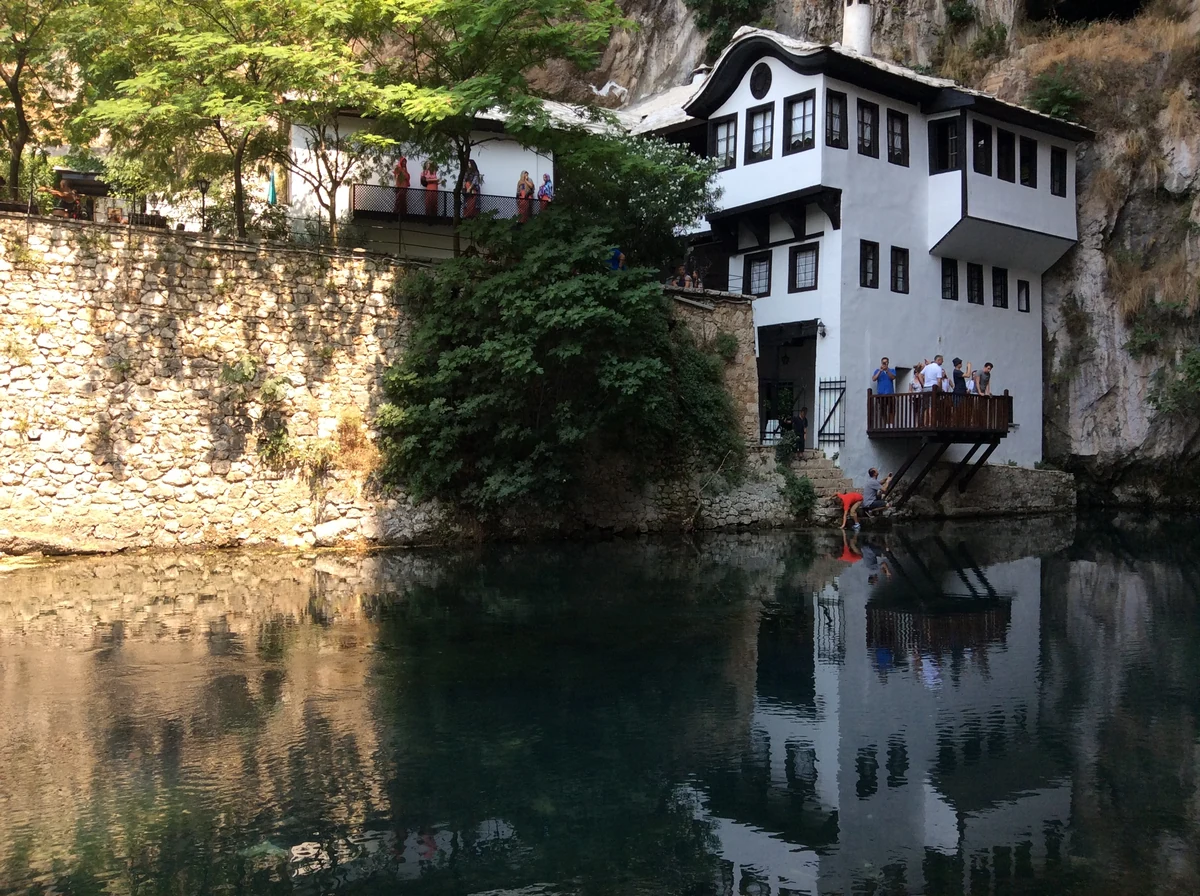
Most travelers to Blagaj see the Tekija (the dervish house at the spring) and leave. They don’t realize that 250 metres above their heads sits Stjepan Grad — the medieval fortress that gave Blagaj its name and was once the capital of Herzegovina.
The hike to the fortress takes 40 minutes, costs nothing, and gives you the best panoramic view in the Mostar region. Almost no foreign tourists do it. This guide is why you should.
Quick visit info
| Item | Detail |
|---|---|
| Location | Hilltop above Blagaj village |
| Distance from Mostar | 12 km, 20 min drive |
| Trailhead from village | Eastern edge, behind the upper houses |
| Trail length | 1.5 km, 250m elevation gain |
| Climb time | 30–40 minutes uphill, 25 minutes down |
| Entry fee | Free |
| Opening hours | Always (no gate) |
| Time at top | 30 minutes minimum |
| Difficulty | Moderate |
A short history
The site has been fortified since at least the Bronze Age — Illyrian tribes built the first walls. Romans used it as a small watchtower. The medieval Bosnian state took over in the 12th century and built the major fortifications you see today.
The fortress was named after Duke Stjepan Vukčić Kosača (1404–1466) — the powerful Bosnian feudal lord who held it as his administrative capital. After Stjepan died, his daughter married Duke Sandalj Hranić, and the castle became part of “Herzegovina” — literally “the duke’s land”, giving the modern region its name.
The Ottomans captured Blagaj in 1465, used it as a regional administrative center, and abandoned it in 1736 when they shifted operations to Mostar. The fortress fell into ruin and stayed that way.
Today: unrestored stone walls standing 5–8 metres high in places, four corner towers (one mostly collapsed), the foundation of a chapel, and a hilltop view that explains why kings chose it.
Why visit
1. The view
The reason most people climb. From the highest tower you see:
- The entire Buna river valley — the bright turquoise spring below
- Blagaj village in miniature, the Tekija looking like a doll house
- The road to Mostar winding through the hills
- On clear days, the mountain peaks of Prenj in the distance
- Bosnian limestone karst extending in every direction
This is the best panorama view of the Mostar region that doesn’t require a chairlift.
2. Solitude
You’ll often be alone up here. While 200 people queue at the Tekija below, the fortress regularly has 0–4 visitors at any time. Even in peak August, the hike filters out 95% of tourists. The silence is something.
3. Real medieval ruins
Unlike the famous Pocitelj fortress (where the Ottomans built over the medieval site), Blagaj fortress is purely medieval Bosnian. The walls are 600+ years old, raw, weathered, unrestored. You can put your hand on a stone and feel the original tool marks.
4. The walk itself
The trail passes through pomegranate orchards, olive groves, and cliff-edge meadows. In spring (March–May), wildflowers everywhere. In autumn (Sept–Oct), pomegranates ripening on the trees.
How to get to the trailhead
From Blagaj village
- Walk to the upper village (away from the Tekija, uphill)
- Look for the brown tourist sign “Stjepan Grad / Tvrđava”
- The trail starts behind the last houses
- Follow the gravel path uphill
The trailhead is 200 metres from the Tekija parking lot — easy to add to a Tekija visit.
Best to combine with Tekija
The most efficient day:
- Morning at the fortress (cooler, empty)
- Late morning at the Tekija (interior tour)
- Lunch in Blagaj by the river
How to get to Blagaj
By car (from Mostar)
- 12 km, 20 minutes via the M17 → M6 (Buna spring road)
- Free parking at Tekija lot
By bus
- Mostar local bus #11 to Blagaj — €1.50, 25 min, every 30 min
- See Mostar to Blagaj guide for full schedule
By taxi
- €15–20 one-way, €30–40 round-trip with 2-hour wait
By tour
The fortress is on our optional add-on for the Kravica Waterfall day tour from Mostar — the standard tour visits the Tekija but for travelers who specifically want to climb to the fortress, we add 90 minutes. €50 per person base + extra time built in. WhatsApp ahead.
For Blagaj-focused trips, book a private transfer from Mostar — €70 vehicle for round-trip with 3 hours wait. WhatsApp +387 62 694 887.
What to wear and bring
Essential
- Sturdy shoes with grip — gravel + loose stone
- Water — 1 litre per person, no shop on the trail
- Sun hat — exposed once you’re above the tree line
- Sunscreen — limestone reflects, easy burn
Useful
- Camera with wide lens — 24mm for the panorama, 50mm for fortress detail
- Light jacket in spring/autumn — wind on the summit
- Snacks — there’s a perfect lunch rock at the top
Don’t bring
- Strollers (impossible)
- Heavy bags (uphill)
- Heels or flip-flops
When to climb
Best months
- April–May — wildflowers, mild temperatures, perfect light
- September–October — autumn foliage, pomegranate season, comfortable
Best time of day
- Early morning (7–9 AM) — shade, cool temperatures, soft photography light
- Late afternoon (16:00–18:00) — golden hour at the top
Avoid
- Summer noon — exposed climb, 35°C+, risk of heat exhaustion
- After heavy rain — gravel path becomes slippery mud
Photography tips
- 24mm lens for the full Buna valley panorama
- 70–200mm telephoto for compressing distant Prenj mountains
- Bring a polarizer for the turquoise river color
- Best light: early morning or 1 hour before sunset
- The Tekija from above — classic top-down shot, requires the climb
Practical tips
- Cash — the fortress itself is free, but Blagaj village shops don’t always take cards
- Phone signal strong throughout (good for emergencies)
- No toilets on the trail or at the top — go in Blagaj village before heading up
- Watch for snakes in summer — vipers exist in the karst, rare but real. Don’t put hands in cracks.
- Bring a small flashlight if you want to peek into the dark corners of the towers
Combine with
Half-day from Mostar
- Blagaj Tekija (1 hour)
- Walk to fortress trailhead (5 min)
- Climb fortress (40 min up, 30 min top, 25 min down)
- Lunch in Blagaj village by the river
Full day combination
Combine with Mostar to Pocitelj + Kravica for the classic Mostar-south day trip. Most efficient via our Kravica day tour from Mostar with custom Blagaj fortress add-on.
Related reading
- Blagaj — is it worth visiting? — full Blagaj guide
- Mostar to Blagaj transport
- Blagaj vs Mostar — comparison
- Pocitelj fortress — the other fortress nearby
FAQ
Frequently asked questions
Where is Blagaj Fortress?
Stjepan Grad sits on the hilltop directly above Blagaj village, 12 km southeast of Mostar. The trailhead starts from the upper village; 30-40 minutes uphill walk on a gravel path.
How old is Blagaj Fortress?
First mentioned 1404, though older fortifications existed on the site. Used by Bosnian kings, then Ottoman governors after 1465. Abandoned 1736 when administrative center moved to Mostar.
Is the climb to Blagaj Fortress hard?
Moderate. 30-40 minutes uphill on a gravel path with some steep sections. Total elevation gain: 250 metres. Wear sturdy shoes. Not suitable for strollers or major mobility issues.
What's the entry fee for Blagaj Fortress?
Free. No ticket booth, no ranger, no opening hours — just walk up. The site is unrestored ruins; bring water and watch your step on uneven stone.