Destinations · 6 min read
Stolac & Radimlja Stećci — UNESCO Medieval Tombstones Guide
Visit the Radimlja necropolis near Stolac — UNESCO-listed medieval Bosnian stećci tombstones. 30 minutes from Mostar, free entry, year-round.
Quick answer
Visit the Radimlja necropolis near Stolac — UNESCO-listed medieval Bosnian stećci tombstones. 30 minutes from Mostar, free entry, year-round.
If you’ve heard of stećci — the medieval Bosnian tombstones — and want to actually see them, the closest major site to Mostar is Radimlja near Stolac, 50 km south. Free, year-round, often empty, and one of UNESCO’s more recent additions to its World Heritage list (2016).
This guide covers the Radimlja necropolis, the Stolac town nearby, and how to visit.
Quick visit info
| Item | Detail |
|---|---|
| Stećci at Radimlja | 133 tombstones |
| Location | 3 km west of Stolac, 50 km south of Mostar |
| Drive time from Mostar | 1 hour |
| Entry fee | Free (no ticket booth) |
| Hours | Always open (no fence) |
| Time needed | 60–90 min for Radimlja, +2 hours for Stolac |
| Disability access | Easy — flat grass field |
| Best months | April–June, September–October |
What stećci are
Stećci (singular: stećak) are monolithic tombstones carved by medieval Bosnians between the 12th and 16th centuries. Almost all are from the time of the medieval Bosnian Kingdom, before the Ottoman conquest (1463).
The 70,000+ surviving examples cluster in:
- Bosnia & Herzegovina (~60,000)
- Croatia, Montenegro, Serbia (~10,000 combined)
Stećci are unique because they don’t fit any standard medieval European tradition. The figures and symbols on them are puzzling: knights with raised hands, dancing women, deer hunts, vines, suns, moons, crosses — but Christian iconography is rare. Scholars debate whether they belonged to the Bosnian Church (a sect possibly heretical to both Catholic and Orthodox traditions), or to local Catholic and Orthodox communities, or to a mix.
In 2016 UNESCO inscribed 30 stećci sites across Bosnia, Croatia, Serbia, and Montenegro as a multi-country World Heritage property. Radimlja is one of them.
Why Radimlja specifically
133 stećci is a lot for one site (most stećci necropolises have 5–30). The artistic quality is unusually high — the relief carving is the best preserved in Bosnia.
Famous individual stones at Radimlja:
- The “Praying Knight” stećak — a tall standing tomb with a knight raising one hand
- The “Dancing Couple” — male and female figures holding hands in profile
- Heraldic shields — with personal symbols of medieval Bosnian noble families
- The “Lion Hunt” — hunting scene with symbolic animals
- Inscribed crosses — some with Cyrillic-Bosnian text in old Bosnian Cyrillic (Bosančica)
The quality of these carvings is part of why Radimlja got UNESCO status while many other stećci sites haven’t.
How to get there
By car (best)
- From Mostar: 50 km southeast on M6 highway
- 1 hour drive
- Brown tourist sign “Radimlja” 3 km before Stolac
- Free parking right at the site
By bus
- 4 daily buses Mostar → Stolac, €4 one-way
- From Stolac bus station, taxi €5 to Radimlja (3 km)
- Or 35-minute walk
By tour
We can include Radimlja on a private transfer from Mostar customised day, starting at €60/vehicle for short routes (multi-stop days scale by distance). Combine with Hutovo Blato + Mogorjelo for a regional day. WhatsApp +387 62 694 887.
The site is not on any standard group tour from Mostar — too niche, takes specialist interest. If you specifically want to see stećci, this is the best site to do it.
What to do at Radimlja
Walk the field
The 133 stećci are arranged in a clearing surrounded by oak forest. Walking the entire necropolis takes 30–45 minutes. Each stone has its own personality — some massive sarcophagus-shaped tombs, some short upright stelas, some flat slabs.
Read the information panels
Bosnian and English information panels explain the major stones, the medieval Bosnian context, and the carving symbolism. Read them.
Photograph
Best light:
- Early morning (8–10 AM) — soft side light brings out the relief carving
- Late afternoon (16:00–18:00) — long shadows emphasize details
- Avoid noon — flat shadows lose the carving definition
A polarizer + 50mm prime is ideal for stećak photography.
Sit and think
The site has the stillness of an old graveyard. Bring a thermos of coffee and sit on a low wall. Most visitors leave after 20 minutes. The reward is the half-hour after that.
Combine with Stolac (3 km away)
After Radimlja, drive 5 minutes to Stolac town. Worth at least 2 hours.
Stolac highlights
- Begovina — 1742 mosque, beautifully restored, free
- Old Town along the Bregava river
- Ottoman houses in the upper old town
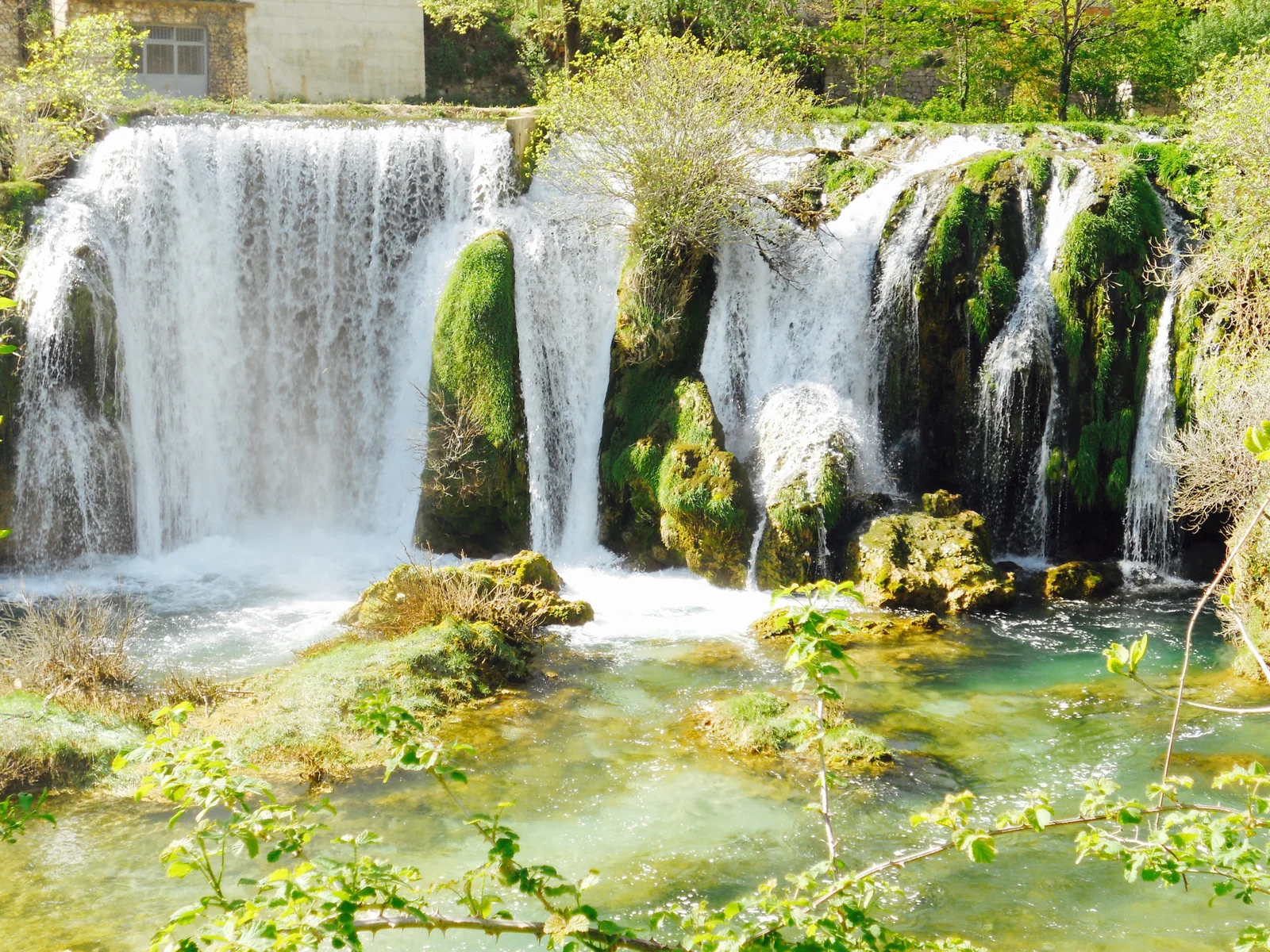
- Bregava waterfalls — small but charming, in town
- Vidoštak Tower — medieval fortress ruins
Stolac was severely damaged in the 1990s war (multiple mosques destroyed by Croatian forces in 1993). Most have been restored. The town today is a quieter, more atmospheric version of Mostar — same Ottoman heritage, fewer tourists.
Lunch in Stolac
- Restaurant Mlinica — riverside, traditional Bosnian, €15–25
- Konoba Stari Grad — local crowd, simpler menu, €8–15
- Cafés on the main square — Bosnian coffee + baklava
Combined day-trip itinerary
Stećci + Stolac + Hutovo Blato (full day from Mostar)
- 9 AM: Mostar pickup
- 10:00: Radimlja necropolis (1 hour)
- 11:30: Stolac Old Town walk + lunch
- 1:30: Drive to Hutovo Blato (40 min)
- 2:30: Hutovo Blato boat safari + walk
- 5:00: Drive back via Capljina
- 6:30: Mostar
Stećci-only half-day
- 10 AM: Mostar pickup
- 11:00: Radimlja
- 12:30: Stolac town walk
- 2:00: Lunch
- 3:30: Drive back
- 4:30: Mostar
When to visit
Best months
- April–June — wildflowers between the stones, comfortable weather
- September–October — autumn light, fewer mosquitoes
Avoid
- August midday — exposed grassland, hot
- Heavy rain — paths get muddy
Best time of day
- Mornings for soft light + empty site
- Late afternoon for golden hour photography
Other stećci sites worth knowing
If Radimlja sparks interest, other UNESCO-listed stećci sites in the region:
- Boljuni (45 min east of Stolac) — 274 stećci, the largest single necropolis in Herzegovina
- Dugo Polje at Blidinje (3 hours northwest of Mostar) — 115 stećci on alpine plateau
- Stećak at Donja Drežnica near Mostar — 1 large stećak in dramatic setting
But Radimlja is the most accessible AND most artistically impressive combination — the standard recommendation.
Practical tips
- Cash for parking and Stolac restaurants — ATMs in Stolac
- Phone signal strong throughout
- Toilets at parking lot, basic
- Bring snacks/water — no shop at the necropolis
- Sun protection — no shade at the field
Visit on a guided tour
Our Kravica Waterfall day tour from Mostar combines the best of the Mostar region — Kravica Waterfall, Pocitelj fortress, and Blagaj Tekija — in one full day. €50 per person, hotel pickup, English-speaking guide, all entries.
For custom multi-stop trips with full flexibility, book a private transfers from Mostar start at €60/vehicle for short routes. WhatsApp +387 62 694 887.
Related reading
- Capljina Travel Guide — gateway to the south
- Hutovo Blato — natural pairing
- Pocitelj Guide — same direction, different era
- Mostar Travel Guide — base for the day trip
FAQ
Frequently asked questions
What are stećci?
Stećci are medieval tombstones from Bosnia, Croatia, Montenegro, and Serbia (12th-16th centuries). 70,000 known examples. UNESCO World Heritage since 2016 for 30 selected sites including Radimlja.
Where is Radimlja?
Radimlja necropolis is 3 km west of Stolac town, 50 km south of Mostar (1 hour drive). Free entry, dawn to dusk, year-round access. Free parking lot.
How many stećci are at Radimlja?
133 stećci preserved in situ, mostly from the 14th-15th centuries. The site is famous for the quality of relief carving — figures, animals, hunting scenes, mysterious symbols.
Is Stolac worth visiting from Mostar?
Yes — easy half-day or combined with Hutovo Blato (1 hour west) for a full day. Stolac itself has Ottoman heritage (Begovina mosque, Ottoman houses, the Bregava river).