Destinations · 8 min read
Pocitelj — Bosnia's Best-Preserved Ottoman Village
Visit Pocitelj — a 15th-century Ottoman fortress town 30km south of Mostar. How to get there, what to see, opening hours, photo spots.
Quick answer
Visit Pocitelj — a 15th-century Ottoman fortress town 30km south of Mostar. How to get there, what to see, opening hours, photo spots.
Quick answer: Pocitelj is a 14th-century Ottoman fortified village on a 90-metre cliff above the Neretva, 30 km south of Mostar. Free entry, 90-minute walk including the fortress climb, best paired with Kravica Waterfall as one full day. Best months: April–June and September–October. Avoid August midday — no shade on the climb. About 15 permanent residents today; most homes are heritage-restored ruins from the 1992–95 war.
If you’ve spent time in Mostar, you’ve probably already seen Pocitelj — even if you don’t realize it. It’s the stone fortress village in every “South of Mostar” photo, the one carved into the cliff above the Neretva, the one with the lone minaret rising out of the medieval walls. It’s been there since 1383.
Most people drive past Pocitelj on their way somewhere else. That’s a mistake. The village is small enough to walk in 90 minutes and old enough that every stone has a story. This guide covers everything: how to get there, what to see, when to come, and why a 600-year-old village is still one of the best half-days in Herzegovina.
What Pocitelj is
Pocitelj (pronounced “poh-CHEE-tell”) is a fortified village built into the western slope of a 90-metre limestone cliff above the Neretva river. It was founded in 1383 by Bosnian king Tvrtko I, expanded by the Ottomans after 1471, and served as a strategic frontier town for 400 years. The Ottomans called it the “key of Herzegovina” — whoever held Pocitelj controlled the river road south.
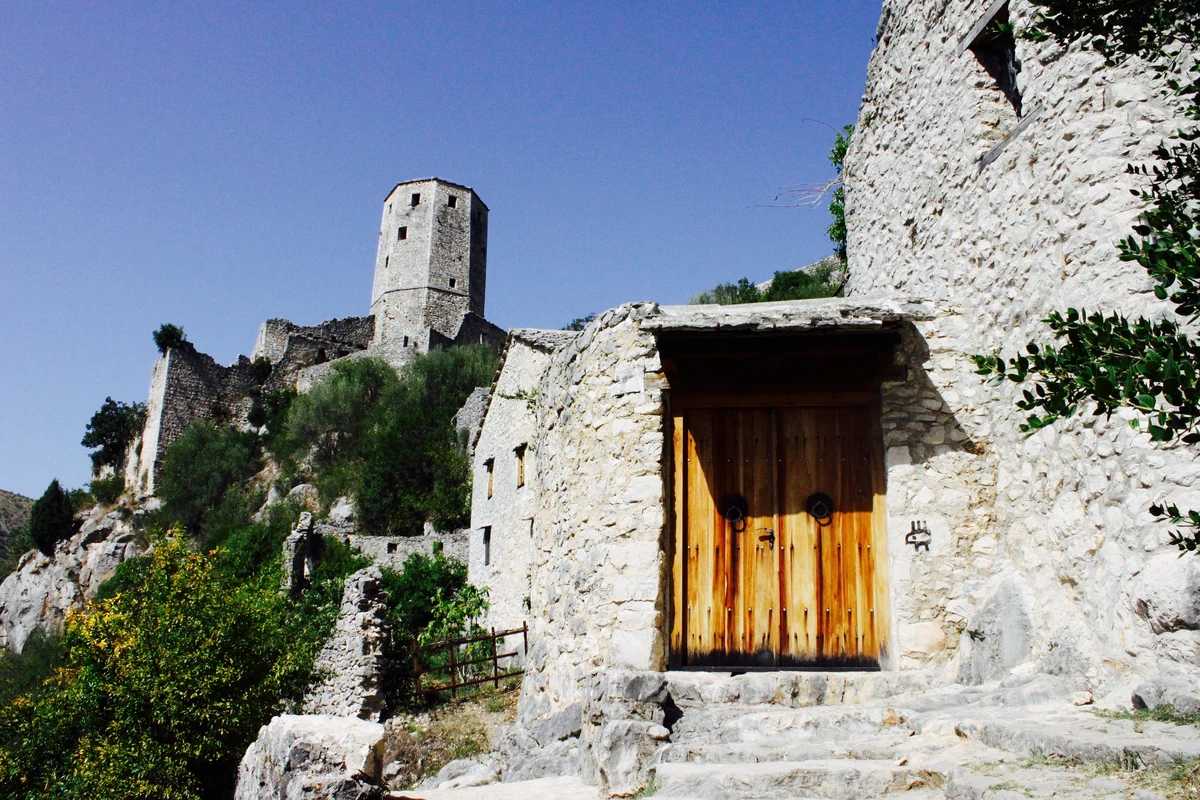
Today the village has about 15 permanent residents. The architecture is almost untouched since the 17th century: cobbled streets, stone houses with red-tile roofs, an Ottoman bath, a clock tower, the historic mosque, and at the top, the medieval fortress (Kula) with views across three Herzegovinian valleys.
Quick visit summary
| Item | Detail |
|---|---|
| Location | 30 km south of Mostar on M17 |
| Drive time from Mostar | 25–30 minutes |
| Time needed | 90 min minimum, 3 hours ideal |
| Entry fee | Free (mosque €2 optional) |
| Parking | Free at village entrance |
| Best months | April–June, September–October |
| Worst time | August midday (no shade, packed) |
| Disability access | Limited — village is steep cobblestones |
How to get there
By car
- 30 km south of Mostar on the M17 highway
- 25–30 minutes drive
- Free parking lot at the bottom of the village (look for the brown tourist sign)
- New Pocitelj-Zvirovici highway bypasses the village — use the marked exit
By bus
- 4 daily buses Mostar → Pocitelj (Capljina-bound buses stop here)
- Cost: €3 one-way
- Travel time: 35 minutes
- Bus drops you at the highway; 5-minute walk down to the village
- Last return bus is around 18:30 — confirm at Mostar bus station
By tour
We include Pocitelj on our Kravica day tour — it’s a natural pairing because both are on the same M17 corridor. €50 per person, full day, includes both stops + Blagaj.
By taxi
- One-way Mostar → Pocitelj: €25–35
- Round-trip with 2 hours wait: €60–80
What to see (in walking order)
1. The clock tower (Sahat Kula)
Your first major landmark coming from the parking lot. Built in 1664, restored after the 1992–95 war. Used to mark prayer times for the Ottoman garrison. Free to view from outside; closed inside.
2. The Hadži Alija Mosque (1563)
Built by Ottoman governor Hadži Alija. One of the few mosques in Herzegovina from this period that survived intact through both World Wars and the 1990s war. The interior has original carved wood and a calligraphic mihrab. €2 entry, donations appreciated. Ladies — bring a scarf for shoulders/head out of respect.
3. The medresa (1626)
Ottoman-era religious school just above the mosque. Restored, partially open. The architectural detail of the carved stone window frames is the highlight.
4. The Tabhana (Ottoman bath)
Stone hammam from the 17th century. Closed to enter but the exterior tells the architectural story.
5. The Kula (medieval fortress)
The reason most people come. A 30-minute climb from the lower village up steep cobbled paths and stone steps to a 14th-century fortress with three remaining towers. From the top: 360° view of the Neretva valley, Mediterranean cypress hills, and on clear days, the Adriatic to the south.
The climb is steep but short. Wear shoes with grip — the cobblestones get slippery in rain. Old people and small kids manage it with rests; serious mobility issues will struggle.
6. The Šišman Ibrahim Pasha Bey Mosque (1563)
Smaller mosque inside the fortress walls, used by the garrison. Now a quiet ruin. Beautiful stonework.
7. The lower village
After descending from the fortress, walk the lower cobbled lanes. Two or three working family homes, a craftsman selling traditional Pocitelj knives (€20–60), and an old well that still produces drinking water.
8. Pomegranate stalls (in season)
September–October the village grandmothers sell freshly-squeezed pomegranate juice from a stand near the parking lot. €3 a glass. Worth it.
When to visit
Best months
- April–June — wildflowers everywhere, mild weather, Ottoman roses in bloom around the village
- September–October — pomegranate season, autumn light, perfect temperatures
- November–March — atmospheric mist, no crowds, mosque sometimes locked, café reduced hours
Avoid
- August midday — limestone reflects heat, no shade on the climb, packed with bus tours
- Friday afternoons — prayer time at the mosque, respectful tourists wait outside
Best time of day
- Early morning (before 10 AM) — soft light on stones, no bus tours, café open
- Late afternoon (after 16:00) — golden hour photography, fortress in best light
Photography tips
Pocitelj is one of the most photographed sites in Herzegovina. A few angles serious photographers use:
- From the M17 lookout (1 km north) — the classic wide shot of the entire fortress village from across the Neretva
- From the fortress walls — looking down at the mosque dome with the river behind
- Inside the lower village — narrow stone alley with cobblestone leading up
- Inside the mosque — natural light through the carved window onto the carpet (no flash, no people in shot)
- Twilight — the fortress silhouette against the orange sky
A drone is restricted but enforcement is rare. If you fly, do so at dawn before tourists arrive.
Where to eat
Tiny village = limited choices, but two spots are worth knowing:
Restaurant Capljinka
At the parking lot entrance. Traditional Bosnian: peka (meat under the iron bell), trout from the Neretva, fresh bread. €15–25 per person. Outdoor terrace with mountain view. Open year-round.
Pocitelj cafés
Two small cafés inside the lower village serve Bosnian coffee (€1.50), tea, and basic sandwiches. Limited menus but good for a break during the fortress climb.
For a proper meal, drive 5 minutes to Capljina or pair Pocitelj with Kravica (bigger restaurants there).
Visit Pocitelj on a guided tour
Most of our Kravica Waterfall day tour from Mostar stops here for an hour — it’s the natural pairing because both sites are on the same M17 corridor. €50 per person, includes hotel pickup, English-speaking guide, all entry, and Blagaj Tekija. See full tour →
Prefer your own pace? We also run private transfers from Mostar with stops at Pocitelj, Kravica or wherever you want — from €60/vehicle for short routes, full flexibility. WhatsApp +387 62 694 887 for a quote.
What’s nearby (combine with)
Pocitelj is the natural midpoint of any Mostar–south Herzegovina day trip:
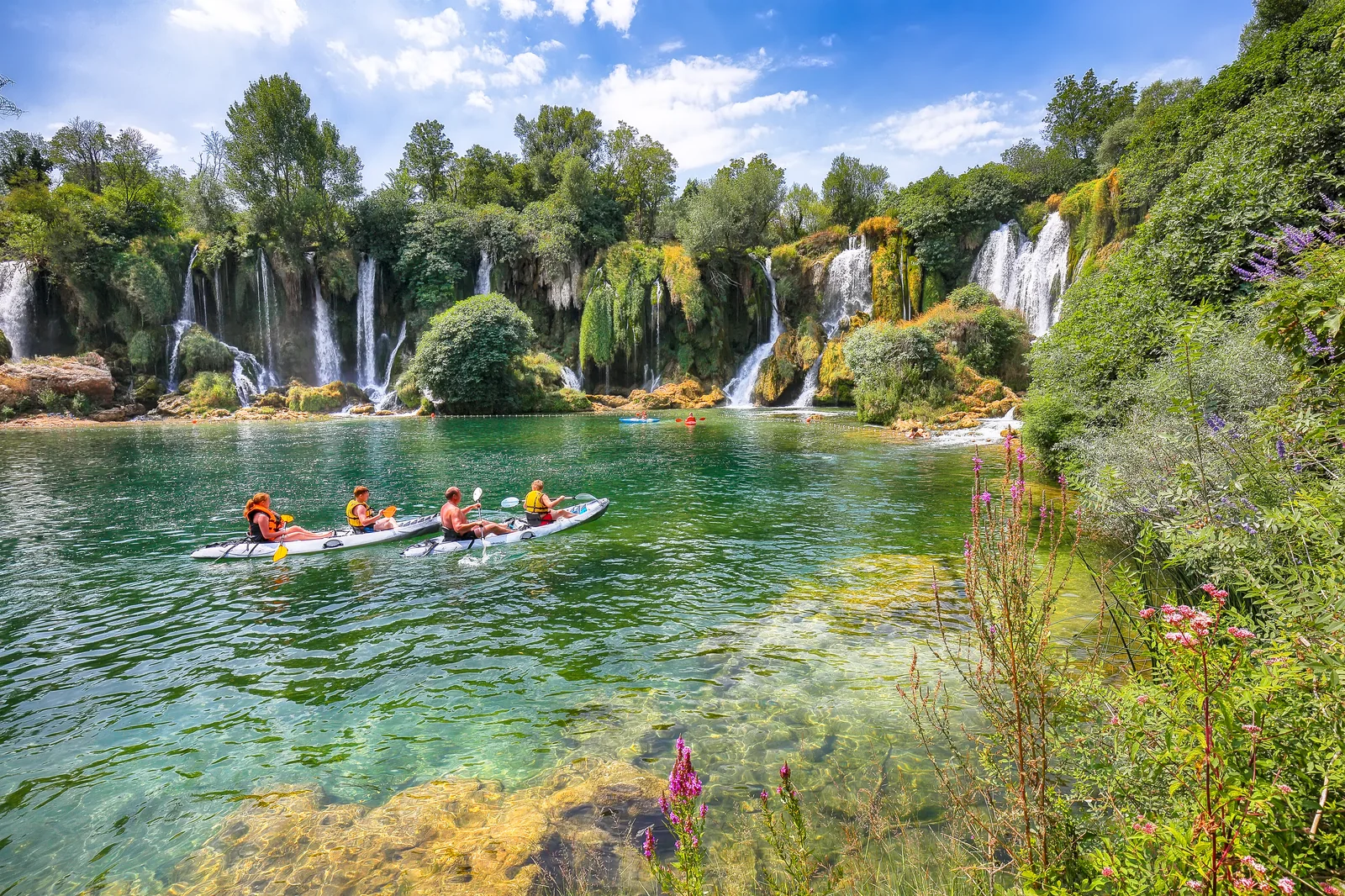
- Kravica Waterfall — 20 min south, perfect pairing
- Blagaj Tekke — 30 min north, dervish house at Buna spring source
- Capljina — 5 min south, regional hub town
- Mogorjelo Roman villa — 10 min south of Capljina, ruins of a 4th-century estate
- Hutovo Blato — 30 min south, wetland nature reserve
Practical tips
- Wear good shoes — the climb is no joke
- Bring water — limited shops in the village
- Cash for the mosque donation — small notes
- Toilets at parking lot only, not inside the village
- No ATMs — withdraw before you come
- Phone signal is patchy in the lower lanes
- Take the highway exit marked “Pocitelj” — Pocitelj-Zvirovici bypass otherwise sends you past
A note on the war
Pocitelj was severely damaged in the 1992–95 war. The Croatian Defence Council shelled the village in 1993 and the Bosniak (Muslim) population was expelled. Many traditional homes were burned; the mosque survived but with damage. International funding (UNESCO, EU, Aga Khan Trust) has restored most of the major monuments since 2002.
Today the village is officially returning — slowly. About 15 of the original 50+ families have come back. The restoration is a quiet story of resilience that deserves more attention than it gets.
Related reading
- Mostar to Pocitelj transport guide — every way to make the trip
- Mostar Day Trip Options — including Pocitelj
- Capljina Taxi & Transport — the nearby town
- Pocitelj-Zvirovici Highway — the new road and what it changes
FAQ
Frequently asked questions
Where is Pocitelj and how do I get there?
Pocitelj sits on the left bank of the Neretva river, **30 km south of Mostar** on the M17 highway, halfway to the Croatian border at Metković. The village is built into a steep hillside; the medieval fortress crowns the top. Drive time from Mostar is 25–30 minutes; from Kravica Waterfall it's 20 minutes north; from the Croatian coast it's 90 minutes from Dubrovnik. Parking is free at the village entrance, with a marked exit off the new Pocitelj-Zvirovici highway bypass.
Is Pocitelj a UNESCO World Heritage Site?
Pocitelj is on **UNESCO's Tentative World Heritage List** — submitted by Bosnia in 2007 but not yet inscribed. It IS a **National Monument of Bosnia and Herzegovina** (designated 2003), giving it full state protection. The 'tentative' status reflects ongoing restoration after war damage, not any concern about historical value. The village is one of only a handful of intact Ottoman-period fortified settlements in the Balkans.
What's the entry fee for Pocitelj fortress?
**There's no entry fee for the village or the fortress itself.** Walk up freely. The historic Hadži Alija mosque charges €2 to enter (donation-based). Parking near the village entrance is free. The Šišman Ibrahim Pasha mosque inside the fortress walls is free to view from outside (currently closed inside). Bring small euros or KM for the mosque donation and any pomegranate juice from village stalls (Sep–Oct, €3/glass).
How long do you need in Pocitelj?
**90 minutes minimum, 3 hours ideal.** The 90-minute version covers the climb to the fortress (30 min), time at the top (20 min), descent (15 min), the lower village walk (15 min), and a coffee break (10 min). The 3-hour version adds a sit-down lunch at Restaurant Capljinka, a slower fortress visit, the historic mosque interior, and time for photos at golden hour. Most people underestimate the climb — give yourself buffer in summer heat.
Is Pocitelj worth visiting?
**Yes — especially if you appreciate Ottoman architecture, hilltop fortresses, or Mediterranean-style stone villages.** It's one of the few Bosnian sites that genuinely lives up to the brochure photos: an intact 14th–17th-century fortified settlement on a 90-metre limestone cliff above the Neretva. It's compact (90-minute walk), free, and easily combined with Kravica Waterfall for a full day-trip from Mostar. Skip if you've already seen Mostar Old Bazaar and have very limited time — there's some thematic overlap (Ottoman architecture).
Can I climb the fortress with kids or older travellers?
**Yes with caveats.** The climb is steep but short — 30 minutes from the lower village to the top via cobbled stairs and stone paths. Kids 6+ manage fine; under-6 will need carrying for the steepest stretches. Older travellers with good mobility manage with rests at the halfway point (sit on the medresa wall, the view is similar). Skip if you have knee issues, balance problems, or wheelchair needs — the cobblestones are uneven and there's no handrail. Wear shoes with grip; flat sandals get slippery on the polished stones.
When is the best time of day and year to visit Pocitelj?
**Best months**: April–June and September–October — wildflowers, mild weather, manageable crowds. **Best time of day**: early morning (before 10:00) for soft light and no bus tours, or late afternoon (after 16:00) for golden hour photography. **Avoid**: August midday (limestone reflects heat, no shade on the climb, packed with day-trippers), and Friday afternoons during prayer time at the mosque. **Pomegranate season** is mid-September to late October — village grandmothers sell freshly-squeezed juice for €3/glass at the parking entrance.
Should I combine Pocitelj with Kravica Waterfall?
**Yes — it's the standard half-day combination from Mostar.** Both sites are on the M17 corridor (Pocitelj 30 km south, Kravica 40 km south). Order: Pocitelj first (cooler in morning, less crowded), Kravica afternoon (swim + lunch). Or reverse if you want to swim before the climb. Most organised day-tours from Mostar include both plus Blagaj Tekija — see our **[Kravica day tour](/kravica-waterfall-tour-from-mostar/)** at €50/person. Self-driving the same loop costs €30–40 in fuel + entries for a group of 4.
Are there restaurants in Pocitelj?
Limited but adequate. **Restaurant Capljinka** at the parking lot serves traditional Bosnian (peka, Neretva trout, fresh bread; €15–25/person, year-round, outdoor terrace). Two small cafés inside the lower village serve Bosnian coffee (€1.50), tea, and basic sandwiches. For a fuller meal, drive 5 minutes to Capljina (more options) or pair Pocitelj with Kravica (the park restaurant is bigger). Vegetarians: side dishes only at Capljinka — call ahead if you need vegan.
Is photography allowed everywhere in Pocitelj?
**Yes for the village, fortress, and exterior of all buildings.** Inside the Hadži Alija mosque: photos allowed without flash, no people in shot during prayer times. The classic wide shot is from the M17 lookout 1 km north of the village (across the Neretva). Other angles serious photographers use: from the fortress walls looking down at the mosque dome with the river behind; the narrow stone alleys with cobblestone leading uphill; twilight silhouette of the fortress against orange sky. **Drones**: technically restricted but enforcement is rare; if you fly, do so at dawn before tourists arrive.
What's the war history of Pocitelj?
Pocitelj was severely damaged in the 1992–95 war. The Croatian Defence Council shelled the village in 1993 and the Bosniak (Muslim) population was expelled. Many traditional homes were burned; the mosque survived with damage. International funding (UNESCO, EU, Aga Khan Trust for Culture) has restored most of the major monuments since 2002. Today the village is officially returning — slowly. About 15 of the original 50+ families have come back. The restoration is a quiet story of resilience that deserves more attention than it gets in standard tourist literature.
What other sites are nearby Pocitelj?
**Kravica Waterfall** (20 min south) — Bosnia's largest waterfall, swimmable June–Sep. **[Blagaj Tekke](/blagaj-tekke/)** (30 min north) — 600-year-old dervish house at the Buna spring source. **Mogorjelo** (15 min south) — 4th-century Roman villa ruins, free entry. **Hutovo Blato** (30 min south) — wetland nature reserve, birding hotspot. **Capljina** (5 min south) — regional hub town, more restaurants. The full Mostar–south Herzegovina day trip combines Pocitelj + Kravica + Blagaj + (optional) Bunski Kanali, doable in one full day from Mostar.