Waterfalls in Bosnia · 8 min read
Kravica Waterfall Photos — Best Angles & Drone
40+ photos of Kravica Waterfall in different seasons. Best angles for shooting, drone tips, instagram spots, and our local guides' favorites.
Quick answer
40+ photos of Kravica Waterfall in different seasons. Best angles for shooting, drone tips, instagram spots, and our local guides' favorites.
Kravica Waterfall is Bosnia’s most-photographed natural wonder. Every angle has been shot a million times. This guide is for travelers who want to take their own version — not just the same shot from the same spot as everyone else.
I’ve guided photographers to Kravica for 17 years. Here’s what works.
The classic shots (and why they’re the classic)
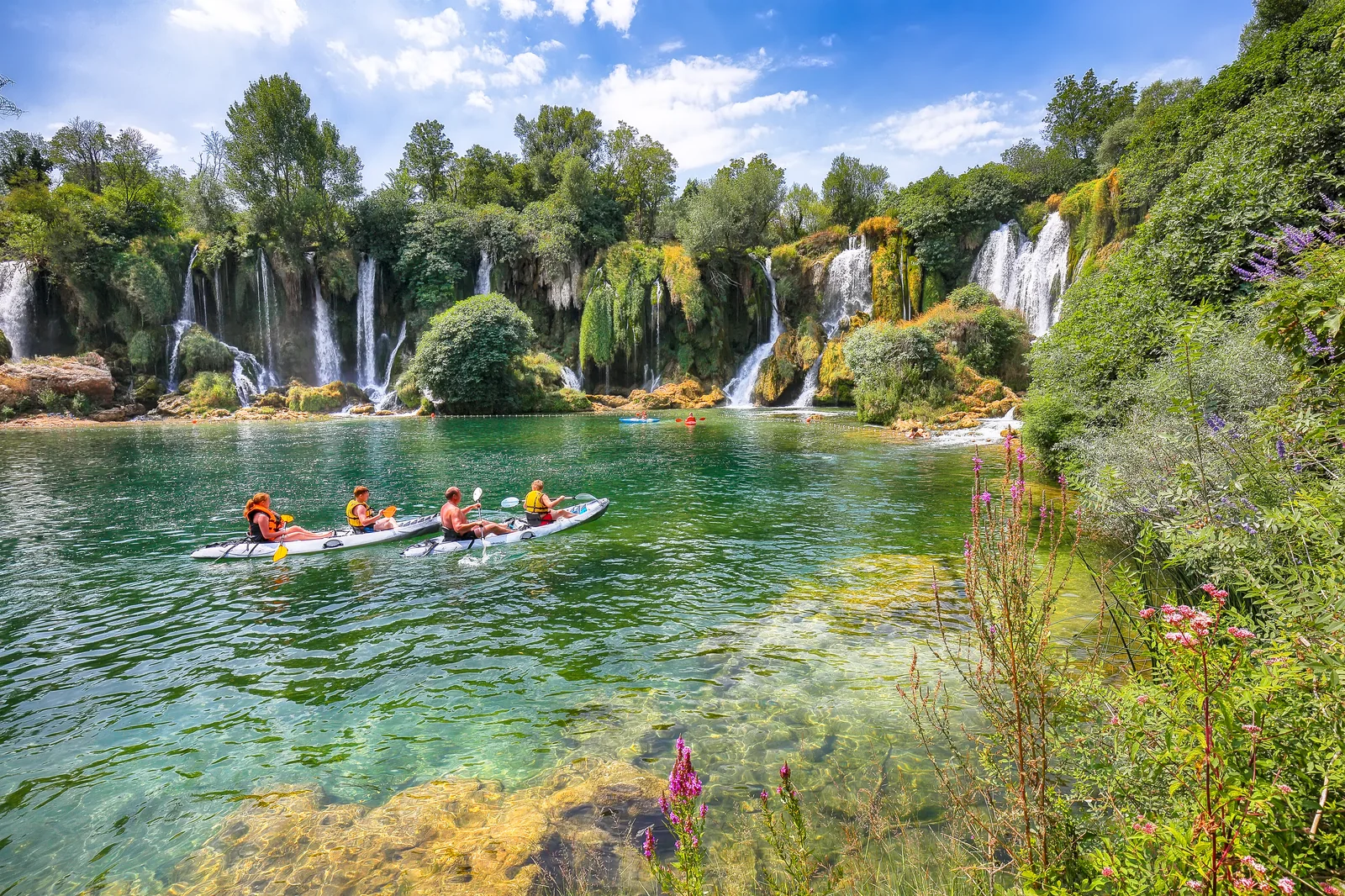
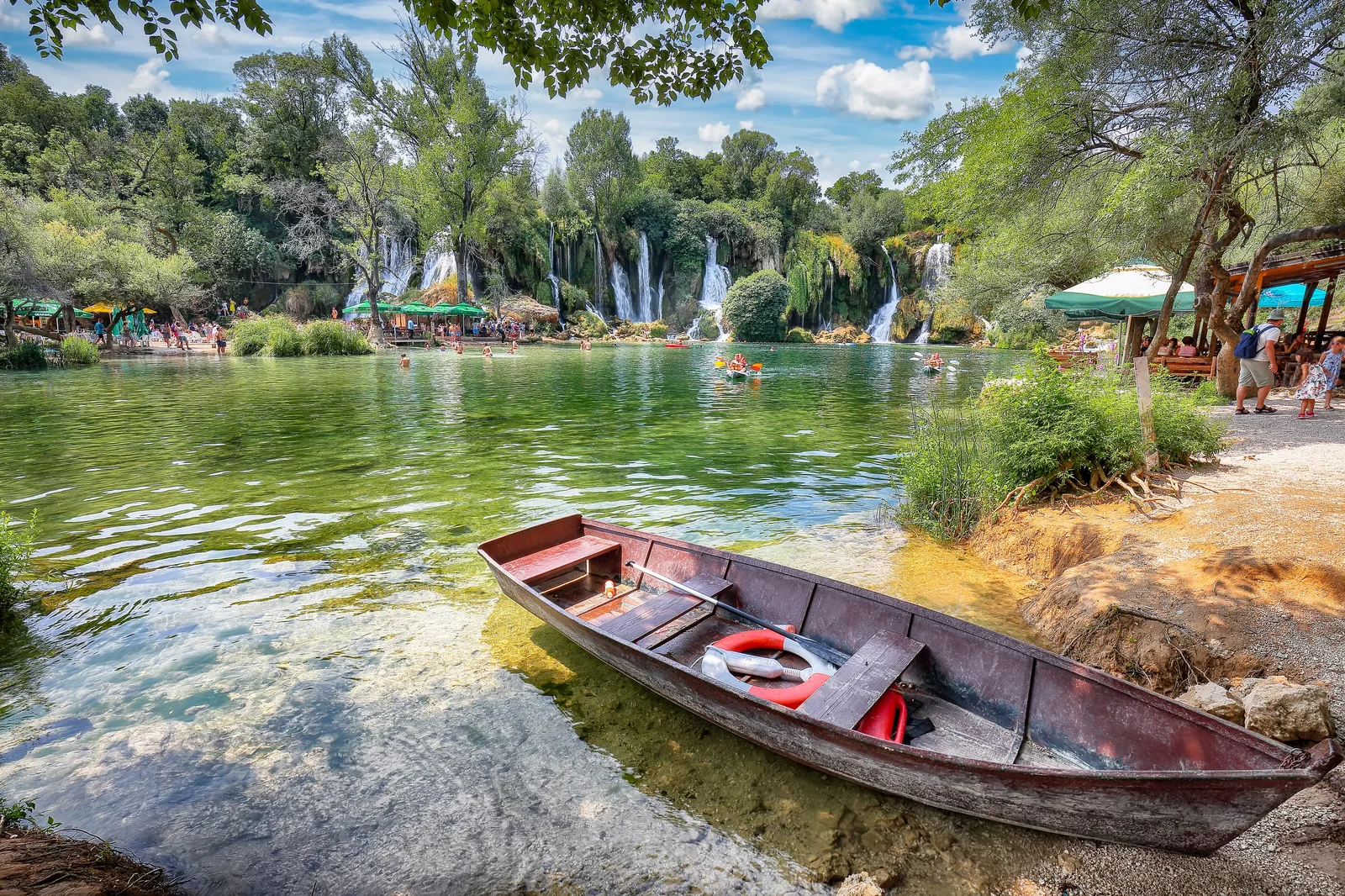
1. Wide horseshoe view from the upper path
Where: The main viewing path that descends from the parking area. Stop halfway down for the panoramic view.
When: Early morning (8:00–10:00) or evening (1 hour before sunset)
Why it’s classic: Whole 25-meter horseshoe in one frame. Cascades, pool, surrounding rock face. Most postcard-style image.
Lens: 16–24mm wide-angle. 35mm if you want tighter composition.
Tips:
- Use a polarizing filter to reduce water glare and enrich blue tones
- Shoot at slow shutter (1/4–1 second) for silky water — bring tripod
- Avoid noon — harsh shadows make the falls flat
2. Water-level swim shot
Where: From the swimming pool below the falls, looking up
When: When pool is calm (early/late) and sky is clear
Why: Diver-eye view of the cascades crashing down. People in foreground for scale. Most “Instagram” shot.
Lens: Phone is fine — wider is better. GoPro for in-water angle.
Tips:
- Bring waterproof case
- Wait for calm water (jumpers and swimmers create chop)
- Cool tones from morning light pair beautifully with green moss on cliffs
3. From the cliffs above (aerial without drone)
Where: Climb the rocky path on the east side of the waterfall (steep, gripping)
When: Anytime — light changes the mood not the angle
Why: Top-down view of the full horseshoe pool
Lens: 24–35mm
Difficulty: Moderate hike, slippery when wet. Wear grippy shoes.
Less-photographed angles
4. Side profile from the eastern bank
Where: Walk along the river path away from the main falls. After 200m, look back
When: Late afternoon golden light hits the falls from the side
Why: No one shoots this angle. You’ll have it alone.
Lens: 50–85mm telephoto
5. Close-up of the small upper cascades
Where: Walk upstream from the main falls. Series of smaller drops.
When: Best in late spring (high water) for full effect
Why: Less photographed because everyone runs to the main falls. The upper cascades are quieter and more intimate.
Lens: Macro for water details, 35mm for context
6. Cave behind the waterfall
Where: Swim up to and around the back of the main falls
When: Calm conditions only (high water makes this dangerous)
Why: From inside the falls looking out — completely unique angle. Few people attempt it.
Tips:
- Strong swimmer required
- Waterproof phone case
- Better with a guide who knows the depth and current
Drone shots
If you have permission to fly:
7. Direct overhead aerial
Where: From parking area, fly south over the falls
When: Golden hour for warm side-light + long shadows
Why: Top-down circular composition shows the horseshoe perfectly
Tips:
- Stay 50m+ above to clear trees
- Avoid peak crowd hours (other people’s day shouldn’t be ruined by drone noise)
- Get operator/park permission first
- Check current Bosnian drone regulations
8. Side aerial along the river
Where: Fly downstream from the falls, looking back
When: Sunset for dramatic light
Why: Shows the full Trebižat River system feeding the falls
9. Low aerial through the mist
Where: Hover 10m above the pool surface, falls behind
When: When mist is rising (cold mornings, autumn)
Why: Atmospheric, almost-cinematic shot
Seasonal photography
Spring (March–May)
- High water flow — most dramatic falls
- Green moss on rocks at peak vibrancy
- No swimmers (water too cold)
- Best for landscape photographers
Summer (June–August)
- Strong light, harsh midday
- Lots of swimmers (good for human scale, bad for empty shots)
- Greenery still vibrant
- Dawn/dusk light is best
Autumn (September–October)
- Comfortable temperatures
- Some leaves changing on surrounding trees
- Light gets softer mid-month
- Fewer crowds — the goldilocks season
Winter (December–February)
- Maximum water flow — falls at their most dramatic
- Mist often rising from cold air meeting cold water
- Sometimes icicles on rocks
- Free park entry
- Almost no other visitors
- Sky often overcast — moody mood
Photographer’s day at Kravica
07:00 — Arrive at parking (open early in summer) 07:15 — First descent — empty paths, soft light 08:00–09:30 — Wide shots from main viewpoints 09:30–11:00 — Swim shots (water still calm) 11:00 — Water gets crowded; switch to upper cascades 12:00 — Lunch at the on-site cafe (sandwiches €5–8) 13:30 — Hike to upper cascades and side profile spots 15:00 — Return to main falls 16:30 — Golden hour begins 17:30 — Sunset shot 18:30 — Drive back to Mostar (40 min)
Equipment to bring
Essential
- Camera with manual mode (or iPhone 12+ for Pro Mode)
- Tripod (for slow water shots)
- Microfiber cloth (mist will fog your lens)
- Waterproof phone case if shooting in water
- Backpack rain cover for spray
Nice to have
- Polarizing filter (cuts glare, deepens blues)
- ND filter (allows long exposures even in bright sun)
- Drone (with permits)
- Underwater housing for full waterproof shots
- Dry bag for camera between shots
Don’t bring
- Heavy heavy gear (the descent path is rocky)
- Anything you can’t replace if it gets wet
Combining your trip
Photography day at Kravica works well combined with:
- Pocitelj (30 min away) — Ottoman village + golden hour photos
- Blagaj Tekija (45 min) — dervish house + spring source
- Mostar in the evening — sunset on Stari Most
Our Kravica + Blagaj + Pocitelj day tour (€50) covers all three in one day with photography stops built in.
Visit on a guided tour
Our Kravica Waterfall day tour from Mostar combines the best of the Mostar region — Kravica Waterfall, Pocitelj fortress, and Blagaj Tekija — in one full day. €50 per person, hotel pickup, English-speaking guide, all entries.
For custom multi-stop trips with full flexibility, book a private transfers from Mostar start at €60/vehicle for short routes. WhatsApp +387 62 694 887.
Related reading
- Kravica Waterfall — Complete Guide — everything beyond just photos
- How to Get to Kravice from Mostar — getting there
- Kravica Waterfall in Winter — off-season photography
- Mostar Photography Spots — for after Kravica
FAQ
Frequently asked questions
Are drones allowed at Kravica Waterfall?
Generally yes, but you need to be respectful of other visitors. No fly during peak crowds (12:00–14:00 in summer). Park staff may ask you to land if it disturbs others. Shoulder season morning is ideal.
What's the best time of day for Kravica photos?
Early morning (8–10) for soft light and empty pools. Golden hour (1 hour before sunset) for warm tones. Avoid midday — harsh shadows + crowds in every shot.
What lens should I bring to Kravica?
Wide-angle (16–24mm) for landscape shots of the full horseshoe. 35–50mm for swimmers and people in scene. Drone for aerial perspective.
Can I photograph the waterfall in winter?
Yes — and it's spectacular. Highest water flow, no swimmers in your shots, dramatic mist, sometimes ice on rocks. Free entry. Just don't expect to swim.