Destinations · 7 min read
Mogorjelo Roman Villa — Bosnia's Hidden Roman Site
Mogorjelo: 4th-century Roman villa rustica near Capljina, 35km from Mostar. Free entry, year-round access, 100+ rooms preserved. Visitor guide.
Quick answer
Mogorjelo: 4th-century Roman villa rustica near Capljina, 35km from Mostar. Free entry, year-round access, 100+ rooms preserved. Visitor guide.
If you stand in the right spot at Mogorjelo on a quiet weekday morning, you can almost hear it — the bath complex still warm from the hypocaust, the grain mill working, the olive press leaking, the dogs barking at something in the garden 1,700 years ago.
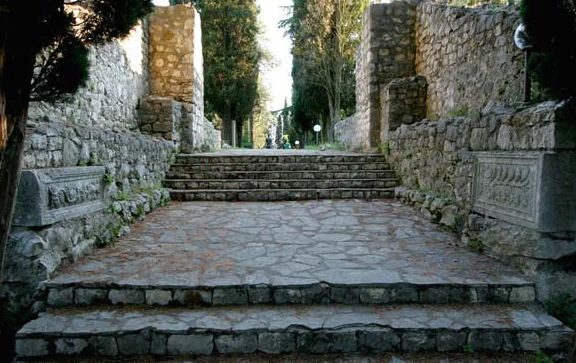
This is the largest Roman villa rustica in the western Balkans that’s still standing in any meaningful way. Over 100 rooms, a complete bath complex, an olive oil press, a granary, watchtowers, and outer fortification walls — all from the 4th century AD. The crazy part: almost no one visits. There’s no entry fee, no opening hours, no gift shop. You just park and walk in.
It’s one of the most underrated heritage sites in Bosnia, and 35 minutes south of Mostar.
What Mogorjelo actually is
Mogorjelo (pronounced “mo-go-ree-yelo”) is a villa rustica — a Roman estate that was simultaneously a working farm, a manor house, and a fortified country residence. The term “villa” in this context means production complex, not just a house. The owners were probably a wealthy Roman family who farmed the fertile Neretva delta and exported olive oil and wine across the Adriatic.
The estate covers 6,000 square metres and is one of the most complete late-Roman complexes anywhere in the Balkans. UNESCO has it on its Tentative List as part of “Historical Garden Suburbs of the Roman Empire”. The Bosnia state designated it a National Monument in 2003.
The site went through three main phases:
- 1st–3rd century AD — earlier rural complex (largely buried under later buildings)
- Late 3rd–4th century AD — current fortified villa built; full production complex
- 5th–6th century — abandoned during the Western Roman collapse and Slavic migrations
The buildings were never entirely destroyed — they were just left to weather. The walls stood for 1,400 years until early-20th-century archaeologists started excavating in 1899.
Quick visit info
| Item | Detail |
|---|---|
| Location | 3 km south of Capljina, 35 km south of Mostar |
| Distance from Mostar | 35 km, 35 min drive |
| Distance from Pocitelj | 10 km, 10 min drive |
| Distance from Dubrovnik | 110 km, 1.5 hours |
| Entry fee | Free, year-round |
| Opening hours | Always open (no fence, just walk in) |
| Time needed | 60 minutes minimum |
| Disability access | Limited — uneven stone, gravel paths |
| Best months | April–June, September–October |
How to get there
By car
- From Mostar: 35 km on M17 to Capljina, then signposted “Mogorjelo” 3 km south. Free parking lot.
- From Dubrovnik: 1.5 hours, single border crossing at Doljani
- From Sarajevo: 2.5 hours via M17
By bus
- Capljina is the closest bus stop (4 daily from Mostar, €4)
- From Capljina, taxi 5 minutes (€5) or walk 30 minutes
By tour
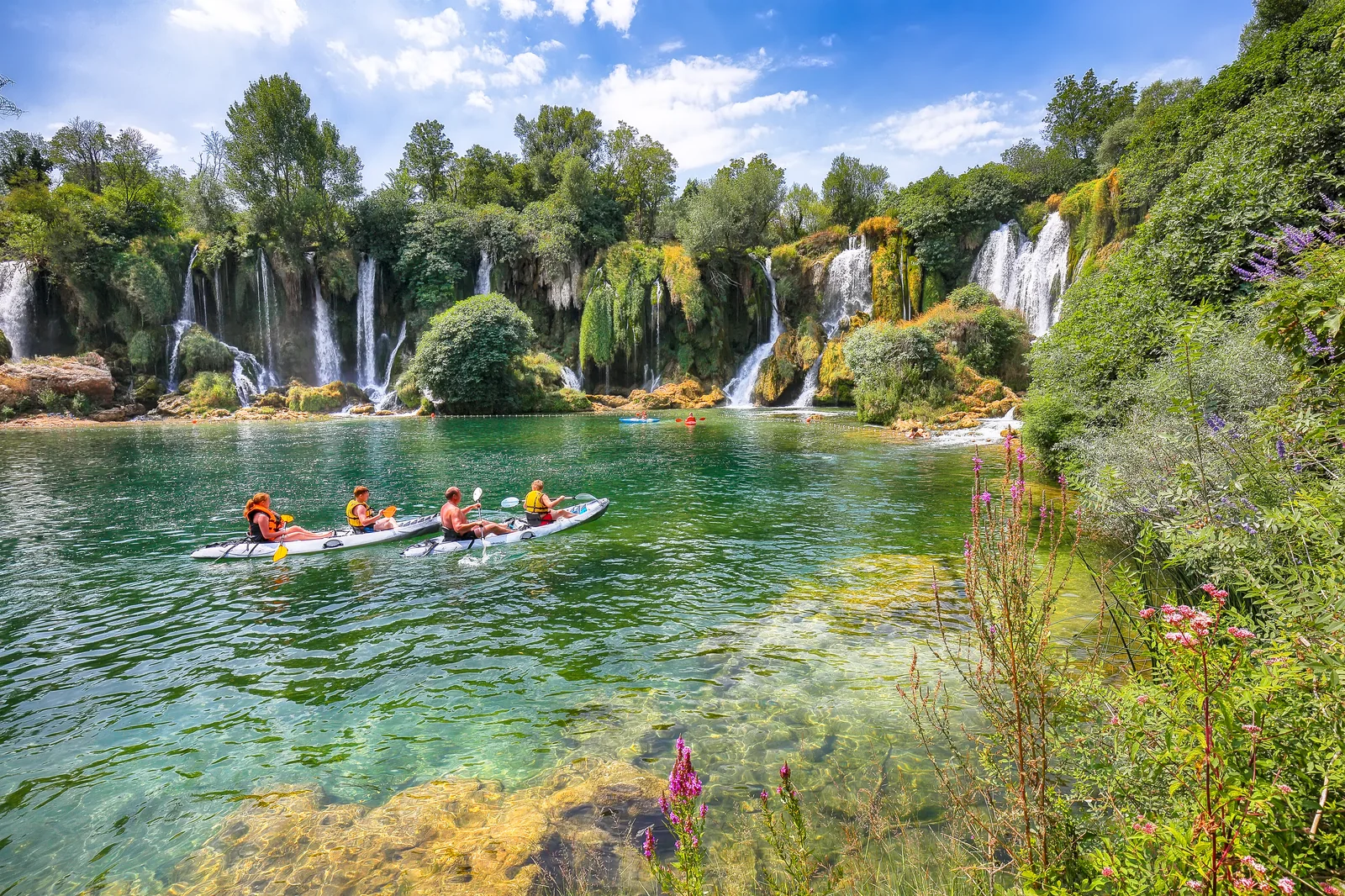
Our Kravica Waterfall day tour from Mostar can be customized to include Mogorjelo as a stop. €50 per person, full day, includes Pocitelj + Blagaj + Kravica + optional Mogorjelo. WhatsApp ahead so we plan time.
For a Mogorjelo-focused private trip with multiple stops, book a private transfers from Mostar start at €60/vehicle for short routes, full flexibility, English-speaking driver. WhatsApp +387 62 694 887.
What to see at the site
The villa complex reads like a small Roman town. From the entrance, walk roughly clockwise:
1. The bath complex (thermae)
The first major structure. Caldarium (hot room), tepidarium (warm room), and frigidarium (cold plunge) all preserved with hypocaust pillars (the underfloor heating system). The mosaic floor of the changing room is still in situ — geometric patterns in black and white tesserae.
2. The peristyle courtyard
The villa’s central garden. Originally surrounded by a colonnaded walkway. The base column drums are still where they fell. Imagine the family lounging in shade with a fountain in the middle.
3. The residential rooms
A row of small chambers along the east side — bedrooms, dining room, perhaps an office. Frescoed walls survive in places. The dining room (triclinium) has a partial mosaic.
4. The olive oil press
The largest preserved Roman olive press in Bosnia. Massive carved stone basins where olives were crushed and the oil collected into ceramic amphorae. This was probably the estate’s main export.
5. The granary
A long colonnaded building where grain was stored — wheat for export, barley for the household. Roman grain bins (raised stone platforms to keep mice out) still visible.
6. The fortification wall
The outer wall is what makes Mogorjelo special — most villae rusticae in the empire had no defenses. By the 4th century the western Roman world was nervous, and this villa was built fortified. The wall stands 3–4 metres in places, with two preserved corner watchtowers.
7. The watchtowers
The southwest tower is the best preserved — three storeys of stone, narrow windows for archers, and the start of a stairway. Worth the small climb.
8. The early Christian basilica
Late in the villa’s life (5th century) part of the complex was converted into a small Christian basilica with an altar and apse. The shape is still legible in the stone.
Why Mogorjelo matters
Three reasons archaeologists travel here:
- Completeness — most Roman villas in the region are scattered fragments. Mogorjelo gives you the whole complex.
- Late-Roman fortification — it’s a textbook example of how rural Roman estates militarized as the empire weakened.
- Continuous occupation — Roman → Byzantine → Slavic transition all visible in the stratigraphy.
For non-archaeologists, the appeal is different: it’s a Roman site with no crowds, no gift shop, no fence. You can sit on a 1,700-year-old stone wall and read a book. Try doing that at the Forum.
Photography tips
- Best light: late afternoon (16:00–18:00) when the limestone goes warm gold
- Best angle: the southwest tower from the olive press area — gets the wall’s full height
- Don’t miss: the bath mosaic, pictured in soft side-light early morning
- Drone: restricted in theory, in practice nobody enforces. Be respectful.
- No tripod restrictions — bring one for the bath room interiors
When to visit
Best months
- April–June — wildflowers between the ruins, comfortable temperatures, soft light
- September–October — golden grass, post-summer quiet, harvest season vibe
Avoid
- August midday — no shade, limestone reflects 35°C heat
- After heavy rain — site gets muddy, paths slippery
Best time of day
- Early morning (8–10 AM) — perfect light, often empty
- Late afternoon — warm tones, dramatic shadows on walls
Practical tips
- Wear walking shoes — gravel paths, uneven stones
- Bring water — no shop on site
- Cash backup — the nearest restaurant takes cards but rural cafes don’t
- Toilets at parking lot only
- Information panels in Bosnian and English — read them
- Restaurant Mogorjelo at the parking entrance does excellent peka and trout. €15–25 per person.
Combine with
The genius of Mogorjelo is its location. Within 30 minutes:
- Pocitelj fortress (10 min north)
- Kravica Waterfall (20 min north) — perfect afternoon stop
- Hutovo Blato wetlands (15 min south) — birdwatching paradise
- Capljina town (5 min) — coffee or restaurant break
A solid full day:
- 9:30 AM Mostar pickup
- 10:15 AM Pocitelj fortress
- Noon Mogorjelo
- 1:30 PM Lunch at Mogorjelo restaurant
- 3 PM Kravica Waterfall
- 6 PM back in Mostar
This is essentially our Kravica day tour from Mostar with Mogorjelo added — €50 per person, hotel pickup, English guide.
Related reading
- Pocitelj — Ottoman fortress village — the obvious pairing
- Capljina Travel Guide — gateway town to Mogorjelo
- Kravica Waterfall — the third stop on a perfect day
- Mostar Day Trip Options — full menu of south-of-Mostar trips
FAQ
Frequently asked questions
Where is Mogorjelo?
Mogorjelo is 3 km south of Capljina town, 35 km south of Mostar. Off the main road to Trebinje. Free entry, dawn to dusk, year-round.
How old is the Mogorjelo Roman villa?
The current ruins date from the 4th century AD, though earlier structures from the 1st century have been identified beneath. The complex was abandoned in the 6th–7th century during the Slavic migration.
Is Mogorjelo free to visit?
Yes. There's no entry fee, no ticket booth, no opening times — just walk in. Information panels in Bosnian and English explain the layout. Allow 1 hour.
Are there guided tours of Mogorjelo?
Not officially on-site, but our [Kravica day tour from Mostar](/kravica-waterfall-tour-from-mostar/) can include Mogorjelo on request. Local archaeology students sometimes give informal tours in summer for tips.
Can I combine Mogorjelo with other sights?
Easily. It's between Capljina and Pocitelj fortress (10 min), close to Hutovo Blato wetland (15 min), and 20 min from Kravica Waterfall. A perfect 'second stop' on any south-of-Mostar day trip.