Mostar Travel Planning · 8 min read
Mostar in Winter — December–February Guide
Mostar off-season: weather, crowds, what's open, what closes, Christmas markets, photography opportunities, and why locals love this season.
Quick answer
Mostar off-season: weather, crowds, what's open, what closes, Christmas markets, photography opportunities, and why locals love this season.
Most travel sites tell you to visit Mostar in summer. They’re not wrong about the weather, but they’re missing the season locals actually prefer. Winter Mostar is a different city — quieter, cheaper, more authentic, and with light that photographers chase year-round.
This guide covers everything: what’s open, what’s closed, what to wear, and the experiences only winter visitors get.
What winter Mostar is actually like
Weather
Mostar has a Mediterranean-influenced climate softened by mountains. Winter is mild compared to most of Bosnia but still real winter:
- December: 5–12°C days, 0–5°C nights. Frequent rain
- January: 2–8°C days, -2 to 3°C nights. Coldest month
- February: 4–11°C days, 0–4°C nights. Often dry and crisp
Snow happens 1–2 times per winter, melts within 24–48 hours. Strong wind (called bura) can chill the air dramatically.
Compared to Sarajevo: Mostar is 5–10°C warmer in winter. Snow is rare here while Sarajevo has it for months.
Crowds
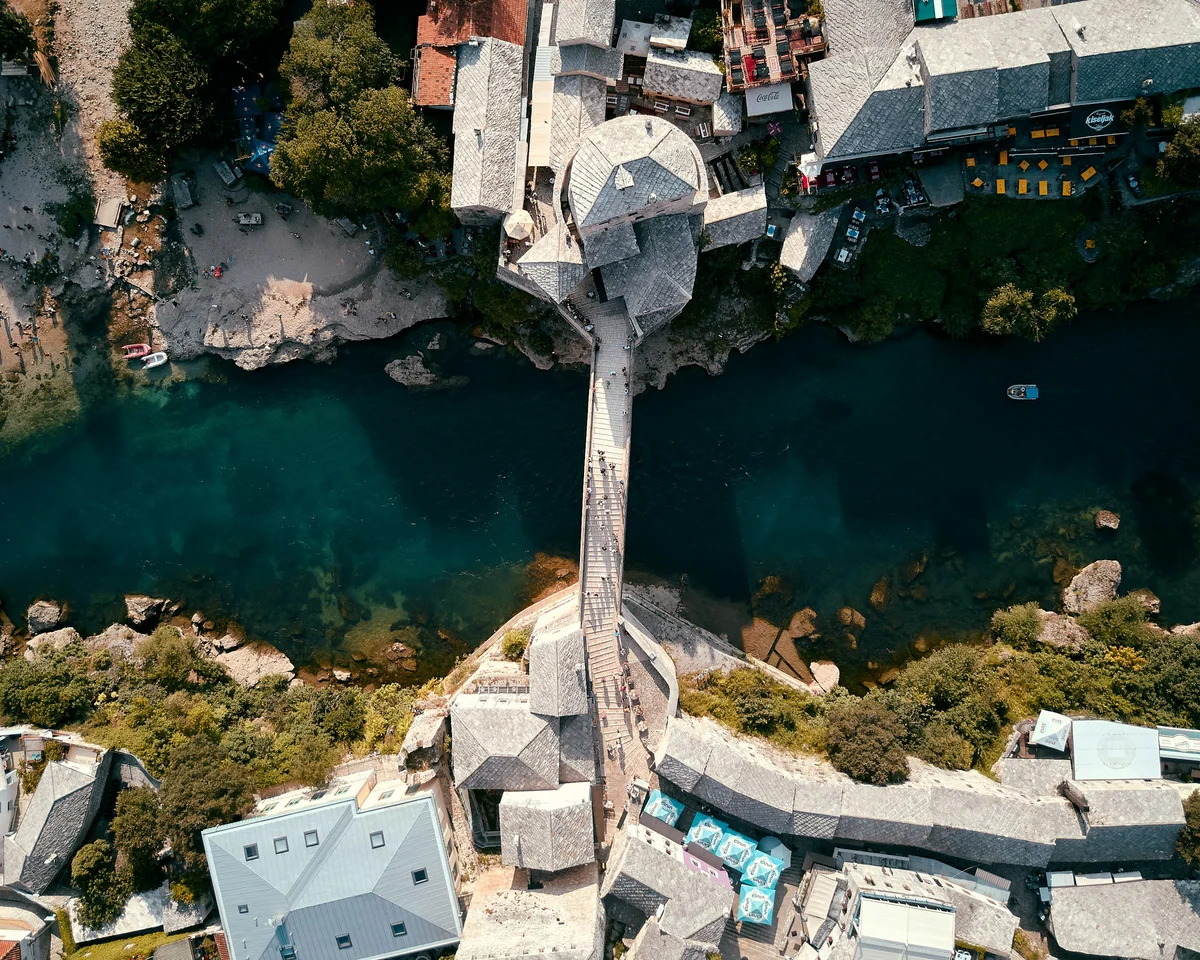
Empty. This is the key. Old Town has 80% fewer visitors than July. You can stand alone on Stari Most for minutes at a time. Restaurants don’t need reservations. Photography is unobstructed.
What’s open
- All major restaurants
- All museums (most reduced winter hours)
- Old Town shops and bazaar (some close mid-day)
- Kravica Waterfall (free entry off-season)
- Blagaj Tekija (free entry, no boats)
- Most hotels and guesthouses
- Bus and train connections (full schedule)
What’s closed or reduced
- Boat tours on the Neretva (limited)
- Some adventure activities (rafting paused Nov–Apr)
- Bridge divers (only on warm days)
- Some Old Town cafés (smaller ones close November–March)
- Outdoor terraces
Mostar Christmas markets
Mostar runs a small but charming Christmas market in the Old Town and on Spanish Square (Španski Trg) from early December to mid-January:
- Hot mulled wine (kuhano vino) €2–3
- Local crafts and handmade ornaments
- Roasted chestnuts and corn
- Traditional sweets (baklava, halva, tufahija)
- Live music on weekend evenings
It’s smaller than Sarajevo’s or Zagreb’s markets but feels more intimate. Best evenings: Friday and Saturday around 18:00–21:00.
Photography in winter
This is when professional photographers come. Why:
Soft, low-angle light
Winter sun stays low in the sky. Stari Most gets warm side-lighting all day. Compare to summer when the noon sun is harsh and shadows are short.
Mist on the Neretva
Cold mornings produce mist rising off the river — dramatic, ethereal photos of the bridge floating in cloud. Best between 6:30–8:30 AM in December–January.
Snow covering Old Town (rare but spectacular)
Once or twice per winter, Old Town gets a dusting of snow. The orange-tile roofs and limestone bridge in white are unforgettable. Watch the weather and grab the next day if it happens.
Empty frame
No tourists in your photos. The street vendors of summer are gone. You can frame Stari Most without a single other person in the shot.
Best photo spots in winter
- Stari Most from west bank — golden hour light hits the eastern face
- Coppersmith Street at dusk — warm shop lighting + cobblestones
- Fortica Sky Walk — mist filling the valley below
- Crooked Bridge — almost no one photographs it; you’ll have it alone
What to do (winter activities)
Walking tours
We run Mostar Walking Tours year-round. Winter walks are intimate (1–4 people typical, vs. 10–14 in summer). Armel often takes groups for hot Bosnian coffee mid-walk in winter (we don’t do this in summer because it’s too hot).
Old Town indoor activities
- Kajtaz House (traditional Ottoman home museum) — open year-round
- Bišćevića Kuća (similar Ottoman house)
- Karadjozbeg Mosque — open for non-prayer visits
- Old Bridge Museum — small museum inside the bridge tower
- War Memorial Museum — sobering, important
Cooking class
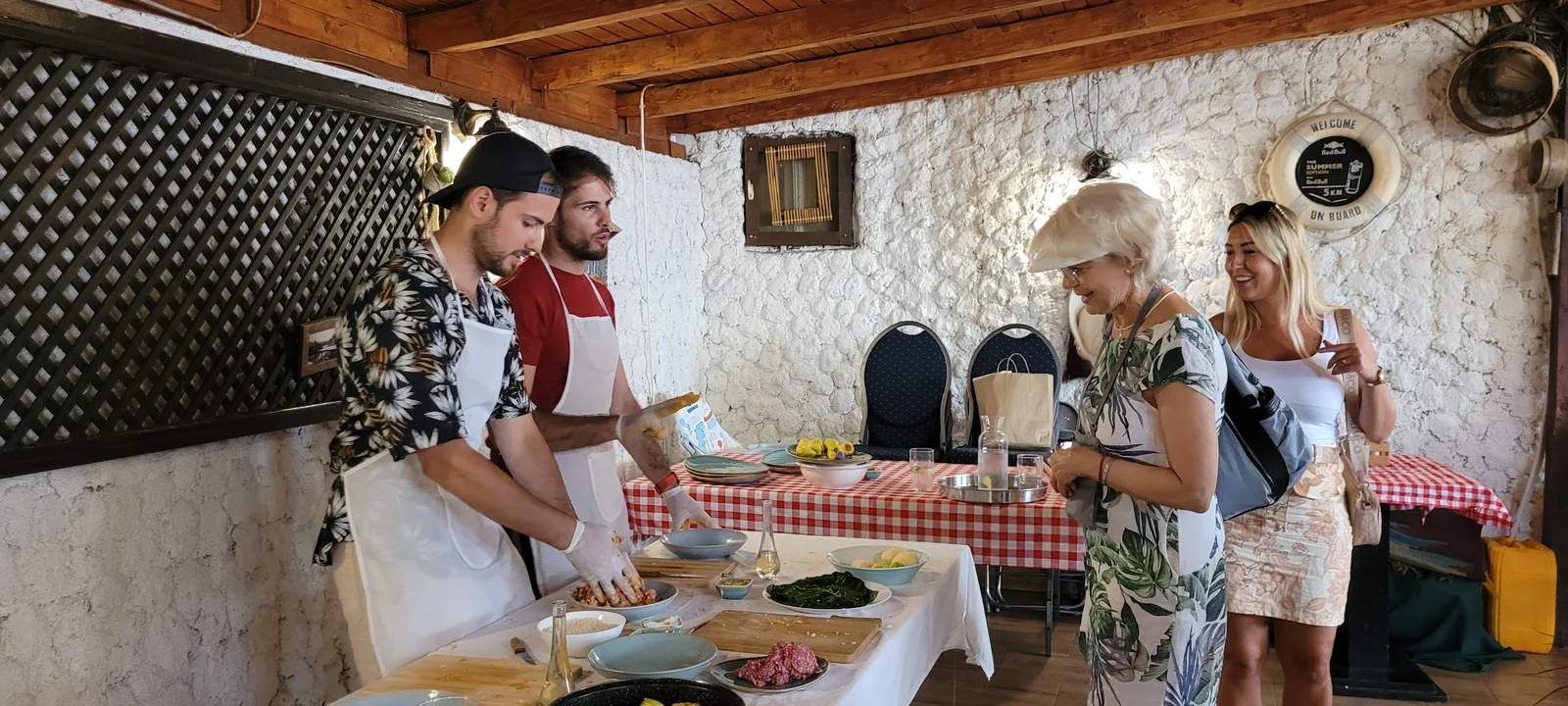
Our Bosnian Cooking Class is actually BETTER in winter — Sladja makes hearty winter stews (sarma, bey’s stew) that don’t fit the summer menu. You eat what you cook in her warm home kitchen.
Day trips (yes, even in winter)
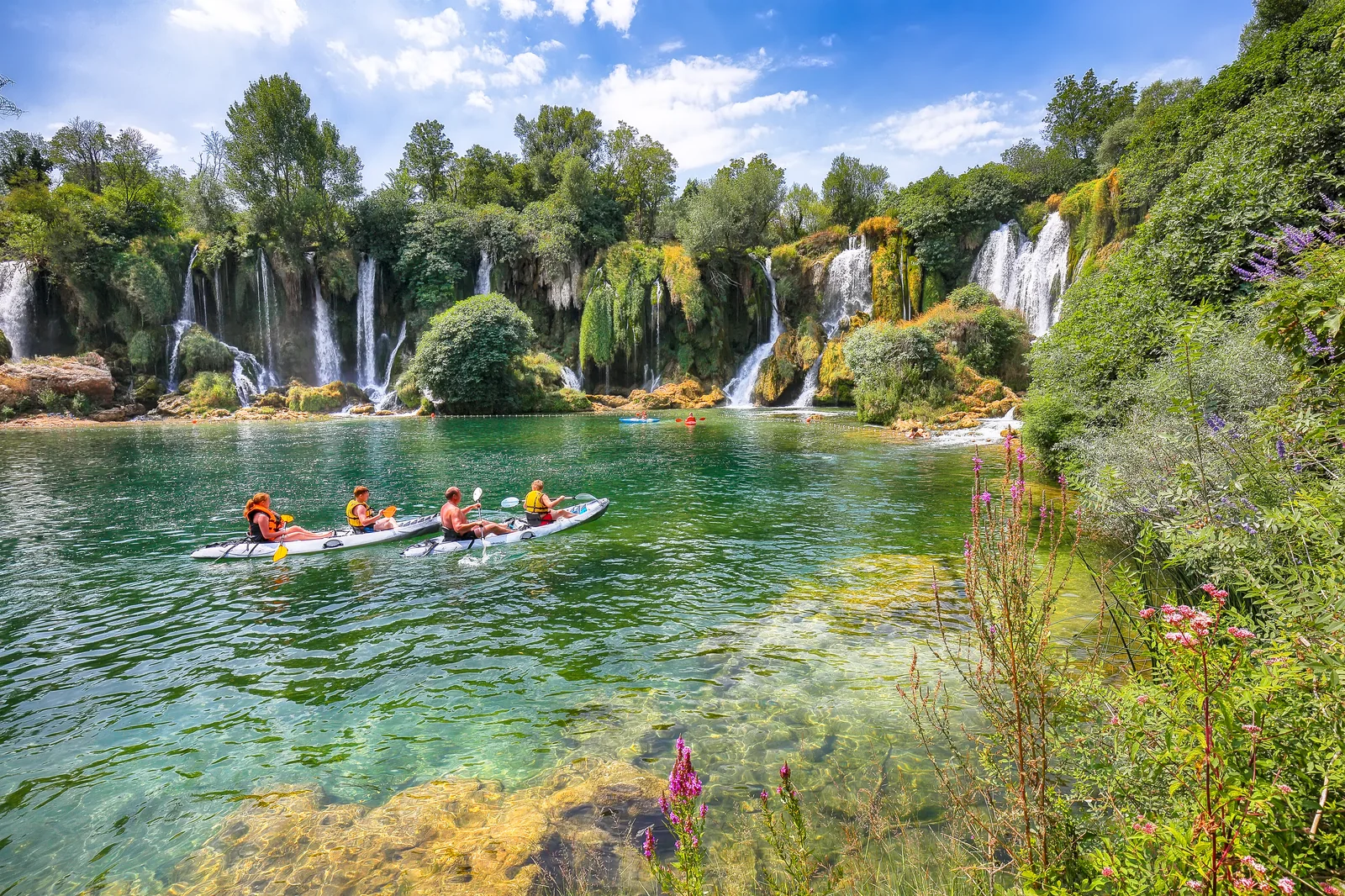
- Kravica Waterfall — dramatic in winter (full water flow, no swimmers)
- Blagaj Tekija — beautiful in mist, no boat into cave (closed)
- Sarajevo day trip — Sarajevo has full Christmas markets December–January
- Pocitelj — quieter, prettier without the bus tours
What’s NOT good in winter
- Rafting (paused November–April)
- Boat tours on the Neretva (limited)
- Outdoor adventure park at Fortica (closed in bad weather)
Where to stay in winter
Heating quality matters
Older Mostar guesthouses have inadequate heating. Confirm before booking. Look for “heated” or “central heating” in listings.
Best winter-friendly options
- Hotel Mostar — central, well-heated, €60–90/night
- Villa Anri (Old Town) — boutique, fireplace in lobby, €70–100
- Apartments with heating — €30–50/night, often better than budget hotels
Avoid: old Ottoman-style guesthouses without modern heating. The romance of period architecture wears off when you’re cold at night.
Prices in winter
| Item | Summer | Winter | Savings |
|---|---|---|---|
| Hotel double room | €60–120 | €30–60 | ~50% |
| Restaurant dinner | €15–25 | €12–20 | ~20% |
| Walking tour | €25–35 | €25 (us) | minor |
| Kravica entry | €10 | Free | 100% |
| Blagaj entry | €4 | €2 | 50% |
| Taxi rates | Same | Same | 0% |
Daily budget in winter: €40–60 per person (vs €80–120 in summer)
What to wear
Essential
- Warm waterproof jacket (rain is frequent)
- Layers (thermal base + sweater)
- Comfortable waterproof boots (cobblestones get slippery)
- Warm hat and gloves
- Scarf (the bura wind chills the neck specifically)
Optional but useful
- Hand warmers for Stari Most photo sessions
- Thermos for tea/coffee on day trips
Not needed
- Heavy snow boots (no real snow)
- Sub-zero rated jacket (rare extreme cold)
- Sunglasses for snow blindness (won’t snow that hard)
Combining with broader winter trip
Winter Mostar pairs well with:
- Sarajevo (1.5 hours) for full Christmas markets and Olympic mountain views
- Dubrovnik (3 hours) also lovely off-season, mild winter
- Sarajevo + Mostar 4-day trip — perfect winter break
For drives between cities, see our How to Get from Sarajevo to Mostar guide.
Why locals prefer winter
When tourists go home, Old Town belongs to us again. Cafe terraces fill with locals. Conversations slow down. Coffee rituals become longer. Christmas markets feel community rather than commercial. The bura wind reminds you which direction is north.
Most locals will tell you: come in October or April for the best mix of weather and quiet. But December–February is when Mostar feels most like home.
Visit on a guided tour
Our Kravica Waterfall day tour from Mostar combines the best of the Mostar region — Kravica Waterfall, Pocitelj fortress, and Blagaj Tekija — in one full day. €50 per person, hotel pickup, English-speaking guide, all entries.
For custom multi-stop trips with full flexibility, book a private transfers from Mostar start at €60/vehicle for short routes. WhatsApp +387 62 694 887.
Related reading
- Mostar Itinerary 1, 2 or 3 Days — same itinerary works in winter
- Things to Do in Mostar — most apply year-round
- Mostar Walking Tour — book a winter walk
FAQ
Frequently asked questions
How cold does Mostar get in winter?
Day temperatures usually 5–12°C in December and February, January is coldest at 2–8°C. Rarely freezes long. Snow possible 1–2 times per winter but melts within a day.
Are tours and restaurants open in winter?
Most are, but reduced hours. Major restaurants and Old Town shops open year-round. Some tour companies pause November–February. We run year-round on demand — check availability.
Is Kravica Waterfall open in winter?
Yes, year-round access. No swimming (water is too cold). Water flow is actually strongest in winter and spring. Photography is dramatic. Free entry October–April.
Why visit Mostar in winter?
Half the price (hotels, restaurants), no crowds, local culture more visible, dramatic light, Christmas markets, atmospheric mist on the Neretva. Locals' favorite season for a reason.