Sarajevo attractions · 6 min read
Baščaršija: Sarajevo's Ottoman Old Town and 562-Year-Old Bazaar
Baščaršija — Sarajevo's old bazaar founded 1462 by Isa-Beg Isaković. Sebilj fountain, Gazi Husrev-beg's Mosque, Morica Han caravanserai, the Sarajevo Meeting of Cultures line.
Quick answer
Baščaršija — Sarajevo's old bazaar founded 1462 by Isa-Beg Isaković. Sebilj fountain, Gazi Husrev-beg's Mosque, Morica Han caravanserai, the Sarajevo Meeting of Cultures line.
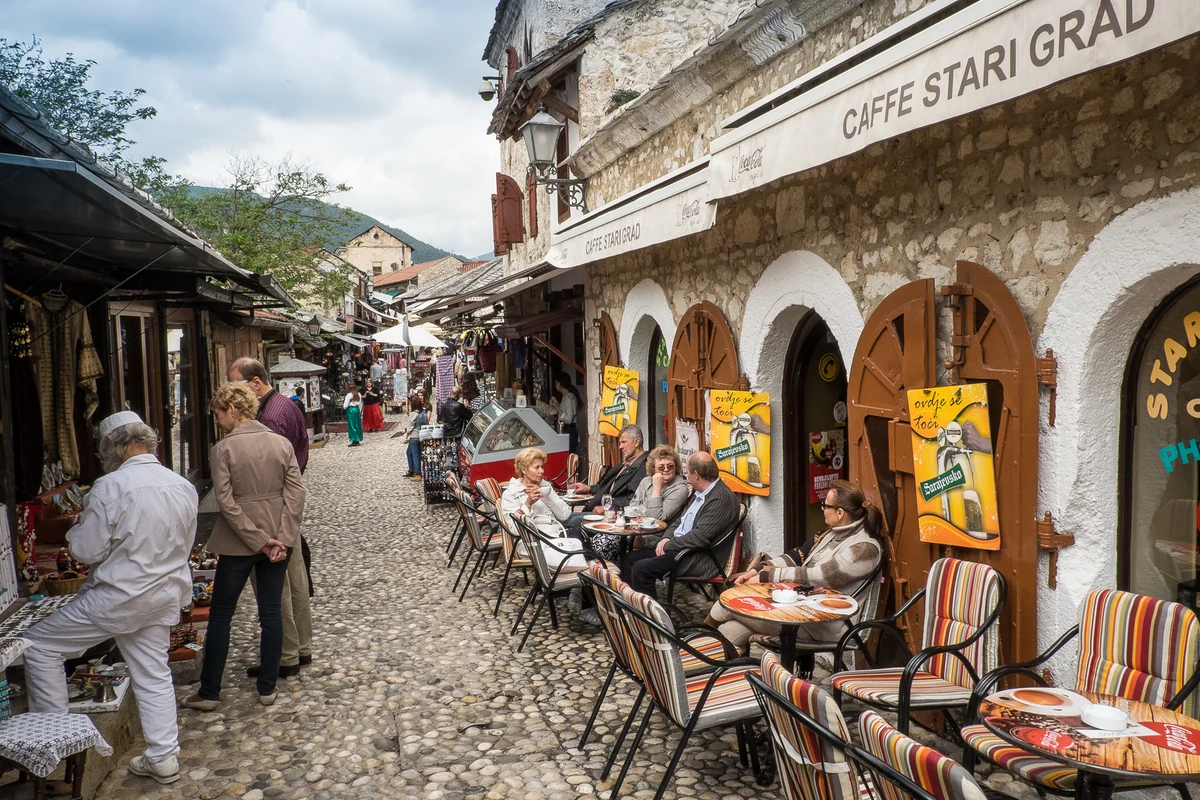
Baščaršija is Sarajevo’s old town — the 562-year-old Ottoman bazaar that became the city’s cultural centre and is still the place every traveller starts. It’s compact (~700 × 300 meters), pedestrianized, and walkable in a single afternoon.
The 1462 founding
In 1462, Ottoman general Isa-Beg Isaković received an order to establish a new city on the Miljacka river. He built a mosque, a public bath, an inn, and a bazaar. The bazaar was the čaršija (“market”); Bašča means “main.” Hence Baščaršija — the main market.
Within a century Sarajevo had grown to one of the largest cities in the Balkans. The bazaar grew too — 70+ different craft guilds at its peak, each with its own street: coppersmiths, leatherworkers, hatters, swordsmiths, jewellers, weavers. Many street names today still reflect the old trades (Kovači = blacksmiths, Mudželeti = bookbinders, Kazandžiluk = coppersmiths).
What to see
Sebilj fountain (Pigeon Square) — the wooden Ottoman fountain at the heart of the bazaar, 1891 reconstruction of an 18th-century original. The square is always full of pigeons; it’s the Trafalgar Square of Sarajevo.
Gazi Husrev-beg’s Mosque — the largest historical mosque in Bosnia, 1530–1532. The first mosque in the world to get electricity (1898). Free to visit outside prayer times. Take off shoes; women cover hair.
Morića Han — the only surviving caravanserai (medieval roadside inn) in Sarajevo. Built 1551. Was rebuilt after a fire and now houses a restaurant in the courtyard.
Sarajevo Meeting of Cultures line — bronze strip in the pavement on Ferhadija. East of the line: Ottoman bazaar. West: Austro-Hungarian boulevards. One of the city’s defining photographs.
Old Orthodox Church (16th century, dark wooden interior, museum upstairs), Old Synagogue (1581, now Jewish Museum of BiH), Brusa Bezistan (covered Ottoman market, now a museum branch).
Coppersmiths’ alley (Kazandžiluk) — narrow paved street where coppersmiths still hammer pots and džezva coffee pots by hand. Buy directly from the workshop; prices are fair.
What to eat
If you only do one meal: ćevapi. Small grilled minced-meat sausages, served with somun flatbread, raw onions, and kajmak (clotted cream). The two famous places are Ćevabdžinica Željo (Bravadžiluk 19) and Petica Ferhatović (Bravadžiluk 31). Both excellent. €4–6 per portion.
Other must-trys: burek (meat-filled hand-rolled filo at Buregdžinica Bosna), Bosanski lonac stew, baklava and tufahija (apple stuffed with walnuts and rosewater syrup) for dessert. Bosnian coffee served in a copper džezva with rahat lokum and a sugar cube — Sarajevo treats coffee as a 30-minute event, not a takeaway.
How long to spend
Half a day minimum. Full day if you also want the Latin Bridge (assassination site, 5 min walk south) and the Tunnel of Hope (war tunnel museum, 20 min by car or tram).
How to get there from Mostar
- Mostar–Sarajevo private transfer — 2.5 hours, fixed €150, drops at Baščaršija itself
- Sarajevo day trip from Mostar — guided same-day round trip
- Bus: Centrotrans / FlixBus runs hourly, €15–20, 2.5–3h
What to combine it with
- Latin Bridge — 5 min walk, where WWI started
- Gazi Husrev-beg’s Mosque — inside Baščaršija itself
- Sarajevo to Mostar day trip — the full-day version
FAQ
Frequently asked questions
What is Baščaršija?
Sarajevo's historic Ottoman-era old town and bazaar, on the north bank of the Miljacka River. Founded in 1462 by Isa-Beg Isaković, the Ottoman general who established Sarajevo. Today it's the city's main tourist district — pedestrianized, full of cafés, restaurants, mosques, and craft workshops.
Where is the Sebilj fountain?
Pigeon Square (Trg Sebilj) is the heart of Baščaršija. The Sebilj is a wooden Ottoman-style public fountain built 1891 (current version is a reconstruction). The local saying: drink from the Sebilj and you'll return to Sarajevo. The square is always full of pigeons.
What's the 'Sarajevo Meeting of Cultures' line?
A bronze line embedded in the pavement of Ferhadija street, marking the boundary between Ottoman-era Baščaršija (eastern, low buildings, narrow alleys, mosques and bazaars) and Austro-Hungarian Sarajevo (western, taller buildings, wider streets, Catholic and Orthodox cathedrals). The text says 'Sarajevo Meeting of Cultures' in English and Bosnian. One of the most photographed spots in the city.
How do I get to Baščaršija from Mostar?
[Mostar to Sarajevo private transfer](/sarajevo-mostar-private-transfer/) — 2.5 hours, drops directly in Baščaršija. Or [Sarajevo day trip from Mostar](/sarajevo-to-mostar-day-trip/) for a same-day round trip with guide.
What should I eat?
**Ćevapi** at one of the dedicated grill houses (Ćevabdžinica Željo, Petica) — small grilled minced-meat sausages with somun bread, onions, kajmak. **Burek** at Buregdžinica Bosna. **Bosnian coffee** in a copper džezva at any of the cafés on Bravadžiluk. **Baklava** and **tufahija** for dessert.
Is everything still authentic or is it a tourist trap?
Genuine — most Baščaršija businesses are still owned by families that have been there for generations (some since the 1500s). Coppersmith alley (Kazandžiluk) is still working coppersmiths, not just a souvenir corridor. Avoid the 2–3 obviously tourist-only kiosks near Sebilj and you're fine.