Destinations · 8 min read
ARK D-0 — Tito's Cold War Bunker in Konjic (Visitor Guide)
ARK D-0 (Atomska ratna komanda), Tito's secret nuclear-war command bunker built into a hillside near Konjic. 6,500 m² of underground rooms, declassified 1992, now a museum + Biennale of Contemporary Art. Hours, €15 entry, photos, how to visit.
Quick answer
ARK D-0 (Atomska ratna komanda), Tito's secret nuclear-war command bunker built into a hillside near Konjic. 6,500 m² of underground rooms, declassified 1992, now a museum + Biennale of Contemporary Art. Hours, €15 entry, photos, how to visit.
ARK D-0 — full name Atomska Ratna Komanda Direktive 0 (“Atomic War Command, Directive 0”) — is the underground nuclear-war command bunker that Tito built in total secrecy 1953–1979 to shelter Yugoslav leadership for 6 months of full nuclear war. Cost ~$4.6 billion in today’s money. Declassified 1992. Opened as a museum 2011.
It is the most unusual museum in Bosnia & Herzegovina, and worth the day trip from Mostar for two reasons:
-
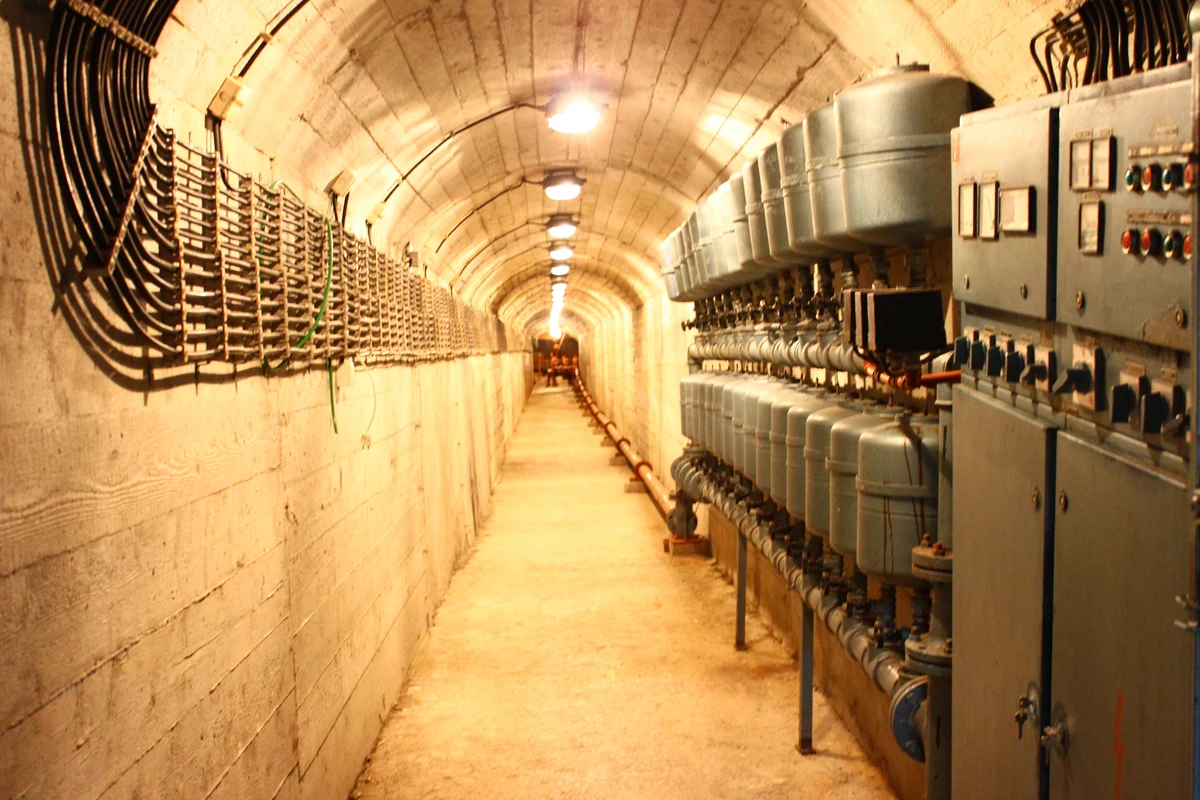
The engineering. Almost nothing in the visitor experience has been modernised. The President’s office, the air-filter complex, the dormitories, the operating theatre, the decontamination chambers — all preserved as they were when the Yugoslav Army withdrew in 1991. The infrastructure is genuinely impressive: redundant power, six-month food storage, hermetically sealed blast doors, a buried command-and-control radio antenna. You can see how seriously Yugoslavia took the Cold War.
-
The Biennale of Contemporary Art. Since 2011 the bunker has doubled as a permanent contemporary-art venue. Works are installed throughout the corridors and rooms — some reference the Cold War directly, others use the brutalist concrete-and-steel architecture as a backdrop. The combination shouldn’t work but does: the austerity of the bunker and the often-playful art create a tension you don’t get at conventional museums.
What you see on the tour
Tours run 90 minutes and cover ~1.5 km of underground passages over four levels. Standard route:
- Block A — entrance, Cold War briefing, dressing-up area where leaders would have entered
- President’s office — Tito’s chair and desk preserved; small private quarters next door
- Command room — the operations centre with original maps and Yugoslav-era radio equipment
- Signal centre — communications hub, encrypted teletype machines
- Dormitories — bunk-bed rooms for 350 personnel, six months’ worth of life
- Air-filter hall — the engineering marvel: massive ventilation system with NBC (nuclear-biological-chemical) filters
- Operating theatre — fully equipped underground hospital
- Decontamination chambers — multi-stage entry/exit decontamination
- Art installations — interspersed throughout, some visible from the corridors, some in dedicated rooms
Practical info
| Address | Borci village, 10 km NE of Konjic |
| GPS | 43.6343, 17.9949 |
| Hours | Tue–Sun · tours at 10:00, 12:00, 14:00, 16:00 (closed Mondays) |
| Entry | €15 / 30 KM adult · €8 / 16 KM child · free under 7 — cash only |
| Tour duration | 90 minutes |
| Inside temperature | Constant ~17 °C year-round — bring a light jacket |
| Photography | Yes, no flash |
| Wheelchair | Partial — main level accessible, lower levels stairs only |
| Booking | Recommended in summer · [email protected] · +387 36 736 700 |
How to combine
The bunker itself is half a day. Common combinations:
- Konjic Old Bridge + lunch — 30 min back into Konjic town for the bridge and a meal at Restaurant Han or Garden. Total day: ~6 hours.
- Tito’s Bunker tour from Konjic — our standalone €35 tour with station pickup (the simplest way to do the bunker without renting a car).
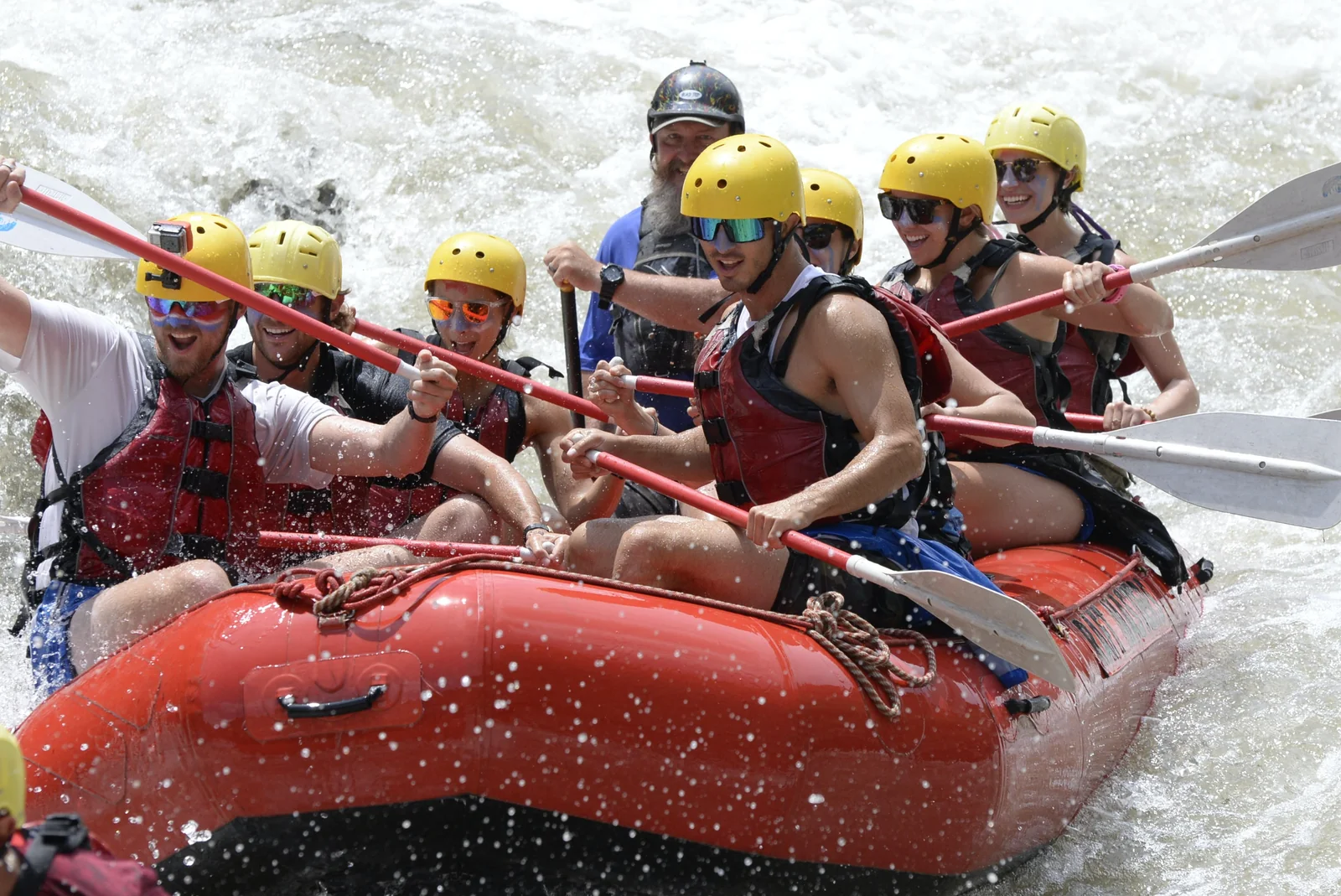
- Tito’s Bunker + Neretva rafting — full-day adventure combination. Bunker in the morning, rafting in the afternoon. €145.
- Add to Sarajevo day trip — our Sarajevo to Mostar day tour can include a 90-minute bunker stop on request, +€10/person. Adds 1 hour to the day.
Background reading before you go
The bunker is impressive on its own, but if you have an hour before the visit it’s worth reading up on the history:
- The bunker was Tito’s personal pet project — he reportedly checked construction progress every six months
- Workers signed lifetime NDAs; the existence of the bunker was a Yugoslav state secret comparable to nuclear-weapons programmes elsewhere
- Yugoslavia’s strategic position (between NATO and the Warsaw Pact) made it a likely first target in any European nuclear exchange — the bunker was a serious attempt at continuity-of-government
- During the 1992–1995 Bosnian War, the bunker was held by the Yugoslav People’s Army, who planned to destroy it on withdrawal. Local Bosnian engineers refused to detonate the explosives, saving the structure intact
For the depth of how surreal this all is, plan to spend at least a couple of hours after the tour just sitting at one of Konjic’s riverside cafés, processing what you saw.
FAQ
Frequently asked questions
What is ARK D-0?
**ARK D-0** stands for **Atomska Ratna Komanda Direktive 0** ('Atomic War Command, Directive 0'). It is a 6,500 m² underground nuclear-war command bunker built 1953–1979 in total secrecy under the Zlatar mountain near Konjic. Designed to shelter Yugoslav President Tito and 350 senior leaders for **6 months of full nuclear war**. Cost: ~$4.6 billion in 2026 dollars.
Where is the bunker?
**10 km north-east of Konjic town** (60 km north of Mostar, 60 km southwest of Sarajevo). The entrance is on a dead-end road in the village of Borci. **GPS:** 43.6343, 17.9949. There is one signposted path; getting lost is not really possible once you reach the village.
When was it built?
Construction began in **1953** under direct orders from Tito and was completed in **1979** — 26 years of secret work. Only 4 of the highest Yugoslav leaders knew the full details. Workers were brought in blindfolded, lived on-site, signed lifetime non-disclosure agreements.
When was ARK D-0 declassified?
**1992**, after the dissolution of Yugoslavia. The Yugoslav People's Army planned to destroy it during withdrawal, but local Bosnian engineers refused to detonate the explosives. The bunker survived the war intact. It opened to the public as a museum in 2011.
What can I see inside?
12 connected blocks of underground rooms over 4 levels — **the President's office, command rooms, signal centre, dorms, kitchen, decontamination chambers, an operating theatre, the air-filter complex (the largest single piece of Cold War HVAC engineering in former Yugoslavia)**, and meeting halls. Many rooms are preserved exactly as they were in 1991, including period furniture and equipment.
Why is contemporary art inside a nuclear bunker?
Since 2011, ARK D-0 has hosted the **Biennale of Contemporary Art** — a permanent and rotating collection of works installed throughout the bunker. The juxtaposition of Cold War austerity and contemporary art is intentional. Several works reference the bunker itself, the Cold War, surveillance, propaganda. Worth as much time as the historical content.
What's the entry fee?
**€15 / 30 KM per adult**, €8 / 16 KM per child (7–18), free under 7. Includes the 90-minute guided tour. **Cash only at the gate** — bring small bills, no card payment available. Booking ahead recommended in summer (max 30 visitors per slot).
Hours and tour times?
**Tuesday–Sunday only** (closed Mondays). Tours run **at 10:00, 12:00, 14:00, and 16:00**. Last entry 16:00. Tours run year-round but indoor temperature is constant ~17 °C — bring a light jacket regardless of season. Booking via [[email protected]](mailto:[email protected]) or +387 36 736 700.
How long is the tour?
**90 minutes** of guided walking through the bunker. The path covers ~1.5 km underground, mostly flat with some stairs. English-speaking guide is standard; German, Italian, French on advance request.
Photography rules?
**Photos allowed throughout** (no flash). No tripods without prior arrangement. Many of the contemporary art works are explicitly photogenic and the curators encourage social media. The tunnel-corridor sections, the President's office and the ventilation hall are the most-photographed spots.
How do I get to ARK D-0 from Mostar?
**By car:** ~1.5 hours via M-17 to Konjic, then 15 minutes east on the local road to Borci. Free parking at the bunker. **By tour:** simplest option is our [Tito's Bunker tour from Konjic](/tito-bunker/) (€35, 3h, station pickup included — you take the train or bus to Konjic, we handle the rest). Or our [Tito's Bunker + Neretva rafting combo](/tito-bunker-rafting-combo/) for a full adventure day. Or our [Sarajevo day trip](/sarajevo-to-mostar-day-trip/) can include a 90-minute bunker stop on request (+€10/person).
Is it suitable for kids?
**Yes, age 8+** — the engineering is genuinely fascinating for older children, the spaces feel like a real-life movie set. Younger kids may find the 90-minute walk and the contemporary art sections boring. Free under 7.