Trebižat River · 8 min read
Trebizat River Waterfalls 2026 — Kravica & Kočuša Visitor Guide
The two iconic waterfalls of the Trebizat River — Kravica and Kočuša — compared, with practical visit guidance for combining them in one half-day from Mostar.
Quick answer
The two iconic waterfalls of the Trebizat River — Kravica and Kočuša — compared, with practical visit guidance for combining them in one half-day from Mostar.
Quick answer: Two main waterfalls on the Trebizat River — Kravica (25 m tall, famous, €10 entry, swim platform) and Kočuša (5 m tall, free, quiet, traditional watermills nearby). Both are within 15 minutes of each other in southern Herzegovina, ~40 km from Mostar. The €10 Kravica ticket includes access to Kočuša. Most group tours skip Kočuša; self-drive or a private transfer is the practical way to do both.
For Kravica specifically see our Kravica Waterfall pillar guide. For the river itself see Trebizat kayaking.
The two waterfalls compared
| Kravica | Kočuša | |
|---|---|---|
| Height | 25 m | 5 m |
| Width | ~100 m | ~50 m |
| Type | Travertine cliff cascade | Travertine sill curtain |
| Entry | €10 (free Nov–Mar, included in Kravica ticket) | Free |
| Swimming | Yes, designated platform Jun–Sep | Wading only, rocky |
| Crowds | High in peak season | Low year-round |
| Restaurants | Three on-site | Two riverside (locals’ spots) |
| Mini-train | Yes (Jun–Sep) | No |
| Watermills | No | Yes — traditional stone mlinice |
| Best for | Postcard, swim, family day | Quiet, lunch, photography |
| Distance from Mostar | 40 km / 35–45 min | 50 km / 1 hour |
The honest summary: Kravica is the destination, Kočuša is the bonus.
Kravica — the famous one
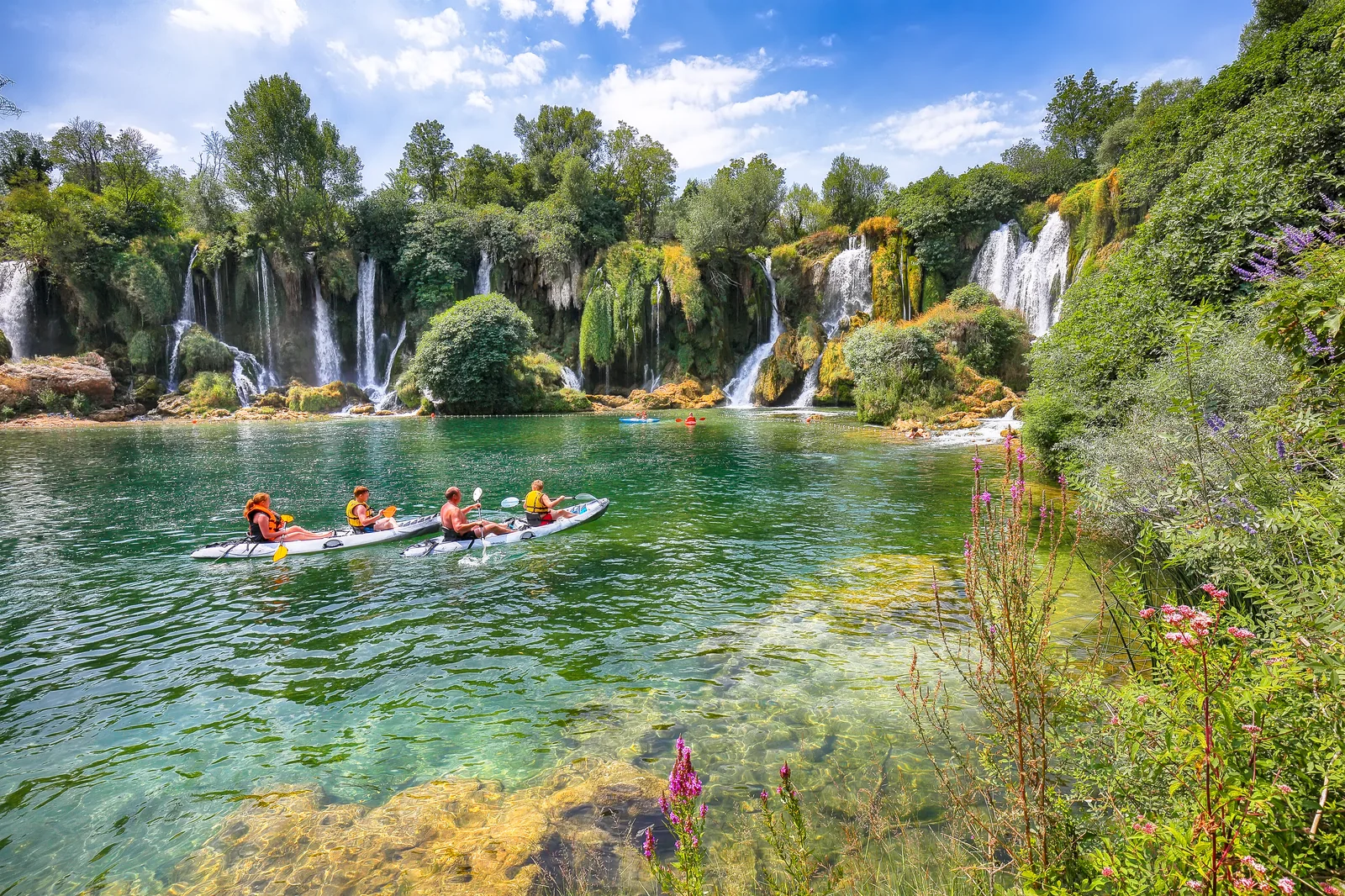
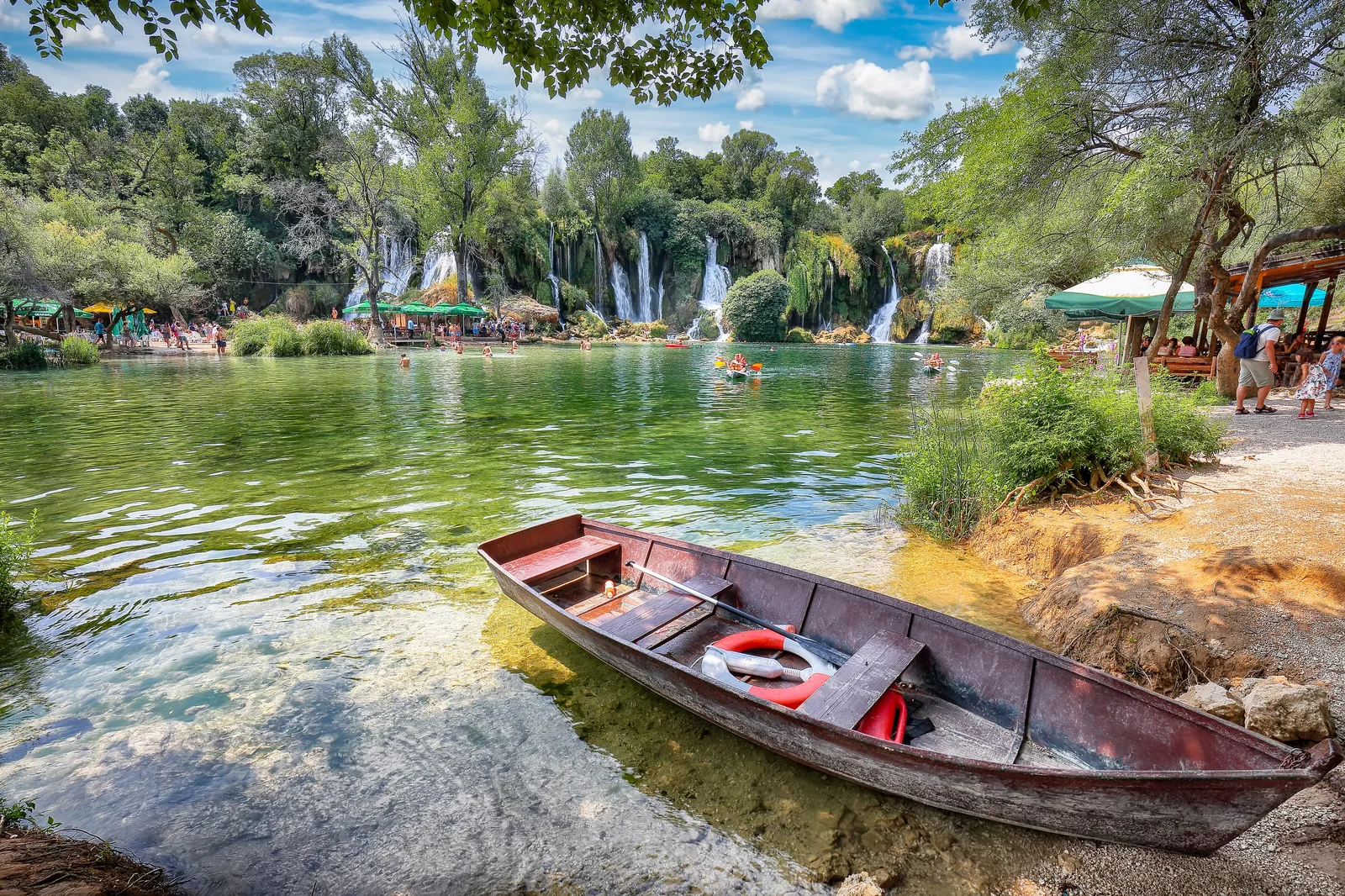
Kravica is Bosnia’s most photographed waterfall and the obvious headline. The 25-metre travertine cliff drops the Trebizat River into a wide swim pool, surrounded by a managed nature park.
For full Kravica details — entry fees, transport, swim conditions, what to bring, the season-by-season character — see our Kravica Waterfall pillar guide. Other related Kravica posts:
- How to get to Kravica from Mostar — all 7 transport options
- Kravica price guide — full cost breakdown
- Kravica tips — 15 actionable visit tips
- Where is Kravica — GPS, geography
- Kravica in winter — off-season visit
Kočuša — the quiet one
Location: Veljaci village, near Ljubuški, ~10 km north of Kravica. GPS approximately 43.2056°N, 17.6147°E.
Scale: a 50-metre-wide curtain of water dropping ~5 metres over a travertine sill. Smaller than Kravica visually, but the wide curtain shape gives it its own atmosphere.
What’s there:
- The waterfall itself, viewable from the road and a short riverside walk
- 2–3 riverside restaurants with terraces directly over or beside the falls
- Several traditional stone watermills (some still operating)
- Small parking area near the road
- No formal entry gate, no ticket booth
What’s NOT there:
- Swim platform (rocks make proper swimming impractical)
- Lifeguards
- Mini-train
- Major tourist infrastructure (souvenir shops, large parking lots)
- Card payment (cash only at the small restaurants)
How to visit both in one day
The standard half-day plan from Mostar:
| Time | Stop |
|---|---|
| 09:00 | Leave Mostar (M17 + Pocitelj-Zvirovici motorway) |
| 09:45 | Arrive Kravica gate, park, descend to falls |
| 10:00–11:30 | Kravica — swim, photos, optional café break |
| 11:30 | Leave Kravica, drive 15 min north |
| 11:45 | Arrive Kočuša |
| 11:45–13:00 | Kočuša — walk, watermill photos, riverside lunch |
| 13:00 | Drive back |
| 13:45 | In Mostar |
Total ~5 hours. Adding Pocitelj on the way back (20 min north) extends to ~7 hours.
Why most group tours skip Kočuša: standard packages run Mostar → Blagaj → Pocitelj → Kravica → Mostar in one day, and adding Kočuša requires either dropping a stop or extending the day. Our private transfers can include Kočuša as a custom add-on — WhatsApp +387 62 694 887 for a quote.
What to do at Kočuša
A 30–45 minute visit covers the basics:
- Walk the riverside path — the small path along the Trebizat River gives multiple angles on the falls
- Visit the watermills — several traditional stone mlinice visible from the path, some still grinding grain or running as informal mini-museums. Owners sometimes offer brief tours
- Lunch at a riverside restaurant — Bosnian classics, fresh trout (the same Trebizat fish), €10–18/main, cash easier than card
- Photography — the watermills + waterfall combination is the standout shot Kočuša offers that Kravica doesn’t
- Wading in the shallows — kids love it; bring water shoes, the rocks are sharp
What to bring (for both)
- Swimsuit + quick-dry towel (Kravica swim platform)
- Water shoes mandatory — sharp travertine rocks at both pools
- Sunhat, sunscreen, sunglasses
- 1–1.5 L water per person
- Cash €30–50 in small notes (Kravica entry, parking, kayak rental, Kočuša restaurant)
- Light cover-up
- Camera or phone in waterproof case
Common Trebizat-waterfall mistakes
- Visiting only Kravica and not knowing Kočuša exists — the most common miss; it’s literally included in your ticket.
- Trying to walk between the two — practical drive only; 15 minutes by car, hours on foot with no marked path.
- Expecting Kočuša to have Kravica-level facilities — it doesn’t; rustic, not managed.
- Trying to swim under Kočuša — water too shallow, rocks too sharp; wading only.
- Booking a group tour expecting Kočuša included — most don’t; ask explicitly when booking.
- Skipping the watermills — Kočuša’s actual unique feature; don’t just look at the falls.
- Visiting in November–March expecting open restaurants — Kočuša local restaurants close in winter; check before going.
Visit on a guided tour
Our standard Kravica Waterfall day tour from Mostar packages Kravica with Fortica Sky Walk, Blagaj Tekija, Bunski Kanali, and Počitelj — but doesn’t include Kočuša by default (the standard route skips it). €50/person, hotel pickup, English guide.
For Kravica + Kočuša + custom stops, our private transfers from Mostar start at €60/vehicle for short routes and can include Kočuša as an add-on. WhatsApp +387 62 694 887 for a custom quote.
Related guides
- Kravica Waterfall pillar guide — full Kravica destination guide
- How to get to Kravica — all 7 transport options
- Trebizat kayaking — paddle the same river upstream
- Trebizat vs Trebišnjica — two karst rivers compared
- Where is Kravica — geography and GPS
- Pocitelj village — combine with the waterfalls
- Mostar travel guide — first-timer essentials
FAQ
Frequently asked questions
How many waterfalls are on the Trebizat River?
Two main ones: **Kravica** (25 m tall, ~100 m wide travertine cliff, the famous one) and **Kočuša** (5 m tall, 50 m wide, multi-tier, much quieter). Plus several minor cascades and travertine steps along the 51-km river. Most travellers visit Kravica only; **adding Kočuša is the local-favourite secret** and adds 30 minutes to the standard Kravica day. Both fall on the same Trebizat River — the same water that powers Kravica downstream emerges in karst springs upstream after one of its 9 underground disappearances.
Is Kočuša waterfall worth visiting?
**Yes — especially if you've already seen Kravica or want a quieter alternative.** Kočuša is a 50-metre-wide curtain of water dropping ~5 metres over a travertine sill, in the village of Veljaci near Ljubuški. **Free entry**, traditional stone watermills nearby (some still functional), local restaurants right by the falls. Far less crowded than Kravica — typically you'll be alone or with a handful of locals having lunch. The trade-off: smaller scale, no swim platform (only shallow wading), no major facilities. Best as an add-on to Kravica, not a destination on its own.
Can you swim at both Trebizat waterfalls?
**Kravica yes** (June–September, designated swim platform with lifeguards, water 16–20°C). **Kočuša only shallow wading** — the pool below the falls is rocky and shallow, fine for kids paddling but not for proper swimming. Both waterfalls have crystal-clear cold water (the Trebizat is a karst river — its travertine deposits literally require pristine water quality to form). For real swimming, Kravica is the answer. For a quieter cool-off and a riverside lunch, Kočuša.
Is the entry to Kravica + Kočuša a single ticket?
**Yes — the €10 Kravica ticket includes Kočuša access** as part of the same protected park area, plus the **Humac Franciscan Monastery and Museum** in Ljubuški. Most travellers don't realise this and pay separately or skip Kočuša entirely. **Visiting Kočuša alone (without Kravica)** is generally free of charge — the access is unmonitored. November–March: Kravica entry is free, so Kočuša is also effectively free. Cash only at Kravica gate; nothing to pay at Kočuša.
How do I see both waterfalls in one day?
**Half-day plan from Mostar (5 hours total)**: 09:00 leave Mostar → 09:45 arrive Kravica → 90 minutes at Kravica (swim, photos, lunch optional) → 11:30 drive 15 min to Kočuša → 30–45 minutes at Kočuša → 12:30 drive back → 13:30 in Mostar. **Self-drive** is the most efficient option; **most organised group tours skip Kočuša** because it's not on their standard route. Our **[private transfers from Mostar](/private-transfers/)** can include Kočuša as an add-on stop — WhatsApp +387 62 694 887 for a custom quote.
What's the difference in scale and atmosphere?
**Kravica**: 25 m tall, 100 m wide travertine cliff, large pool, swim platform, three on-site restaurants, paid entry, mini-train, often busy. Feels like a managed nature park. **Kočuša**: 5 m tall, 50 m wide, gentle curtain over a travertine sill, traditional stone watermills, riverside restaurants, free entry, no facilities beyond the local restaurants. Feels like a village swimming hole. Trade-off in one sentence: **Kravica is the postcard, Kočuša is the village.**
Where exactly is Kočuša Waterfall?
**In the village of Veljaci**, ~10 km north of Kravica, ~10 km south of Ljubuški. GPS approximately 43.2056°N, 17.6147°E. The drive from Kravica is 15–20 minutes via local roads. From Mostar direct, it's ~50 km (1 hour). Park free at the small lot near the falls or by the riverside restaurants. The falls are right next to the road — no descent path, you just walk to the riverbank.
What activities are at Kočuša that aren't at Kravica?
**Traditional stone watermills (mlinice)** — several visible at Kočuša along the river, some still in operation grinding grain or running as mini-museums. They date from Ottoman period and were the village's economic lifeline before electricity. **Riverside restaurants** with terraces over the falls themselves (different from Kravica's restaurants which are above the falls). **Locals having lunch on a Sunday** — Kočuša is where Veljaci village families gather; the social atmosphere is genuinely different from a tourist-park feel. **Watermill photography** is the standout that Kravica doesn't offer.
Can I walk between Kravica and Kočuša?
**Theoretically along the Trebizat River, but practically no.** The river meanders ~10 km between the two falls through agricultural land and small villages. There's no marked walking path between them, and the route would take 3–4 hours one-way over uneven terrain with no facilities. **Drive instead** — 15 minutes by car or taxi. If you want a river-walking experience, the upstream Trebizat valley (Studenci, Matica section) has marked paths and is where the **[Trebizat kayak trips](/trebizat-kayaking/)** launch from.
Are there other minor waterfalls on the Trebizat?
**Several smaller cascades and travertine steps** along the river that aren't formally named or marked. The most accessible 'extra' is the small cascades visible from the kayak put-in at **Studenci**, where the Trebizat creates a series of small drops over travertine deposits. **Ravlića Cave / Peć Mlini area** (20 minutes from Kočuša) has additional cascades plus an adventure park (Bosnia's longest zipline) — different experience but same river system. The famous two (Kravica + Kočuša) are the only ones with proper visitor infrastructure.
What's the best time of year to visit both?
**May–June** for fullest water flow (Trebizat fed by spring snowmelt) + lush green surroundings. **June–early September** for swimming at Kravica (water 16–20°C). **September–October** for autumn light and quieter Kravica + still-warm-enough Kočuša. **November–March** Kravica is free entry but no swimming, café closed; Kočuša remains accessible but watermills may be locked. **Avoid August midday** — Kravica is at peak crowds and heat. **Best window overall**: late May or mid-September.
Why is the Trebizat called a 'sinking river'?
Because **it disappears underground 9 times along its 51-km course** through karst limestone country, taking different names at each resurgence (Vrlika, Tihaljina, Mlade, Matica, Trebizat). This is classic karst hydrology — the limestone bedrock has cave systems that the river uses as natural conduits. Each time it re-emerges, it's the same water with a different local name. The **second-largest 'losing stream' in Bosnia**, after the Trebišnjica river. The clarity and travertine-forming water quality is what makes the Trebizat's two waterfalls so visually striking — only pristine water deposits travertine. See **[Trebizat vs Trebišnjica](/trebizat-vs-trebisnjica/)** for the comparison.